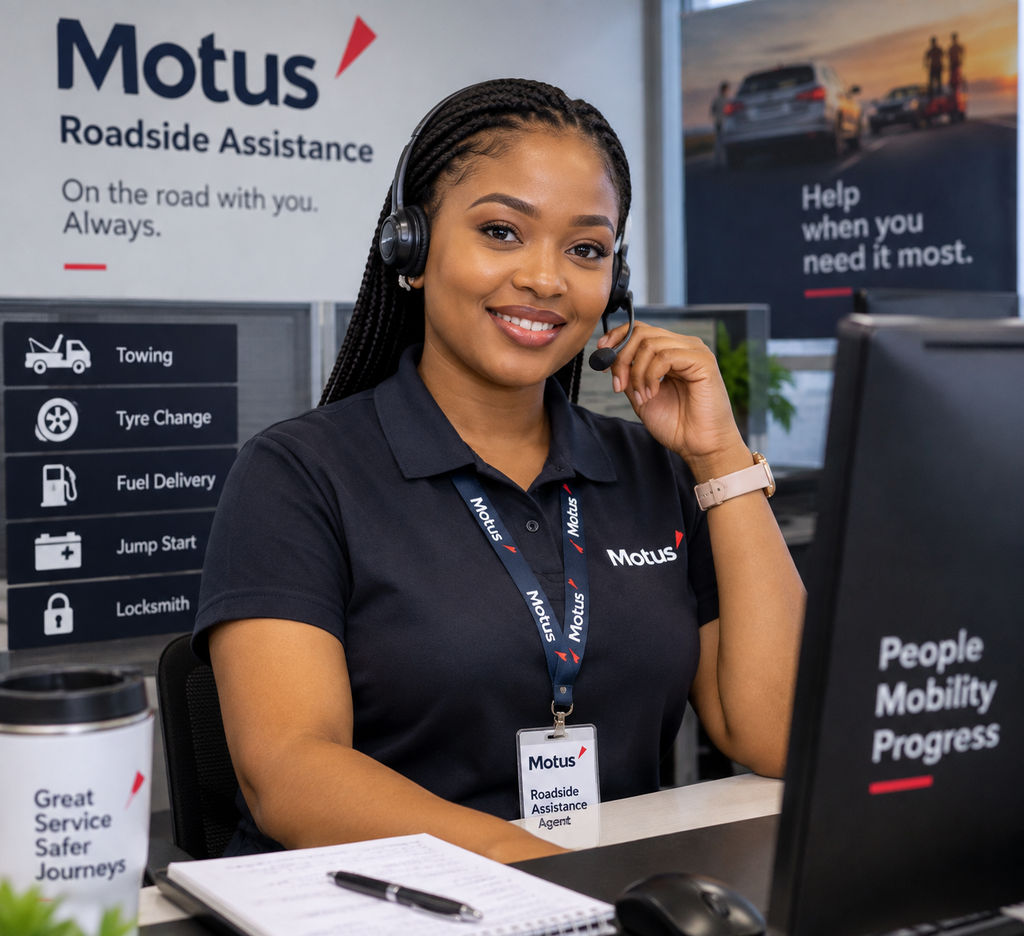
Are you looking for a Roadside Assistance Agent job in Johannesburg? Motus Corporation is recruiting a Roadside Assistance Agent for its Motus Mobility Solutions – LiquidCapital Division Roadside business unit in Johannesburg, Gauteng.
The position is an entry-level customer service opportunity focused on assisting motorists who experience vehicle breakdowns and require roadside assistance. The successful candidates will communicate with customers, diagnose roadside problems over the telephone, arrange towing and technical assistance, coordinate with service providers and dealerships, and ensure that customers are assisted as quickly as possible.
The vacancy was posted on 9 September 2026, with a closing date of 15 September 2026.
Company: Motus Corporation Division: Motus Mobility Solutions Business Unit: LiquidCapital Division – Roadside Job Title: Roadside Assistance Agent Location: Johannesburg, Gauteng Industry: Financial Services Functional Area: Customer Service Experience Level: Entry Level Contract: Contract position Minimum Education: Grade 12 / Matric Closing Date: 15 September 2026
The Roadside Assistance Agent plays an important role in helping motorists who are stranded because of vehicle breakdowns or other roadside emergencies.
The agent’s primary responsibility is to get the customer off the road as quickly and safely as possible while arranging the appropriate assistance. Depending on the problem, this could involve dispatching a tow truck, technical assistance, locksmith, tyre-change service, fuel delivery or battery jump-start service.
What Does a Roadside Assistance Agent Do?
A Roadside Assistance Agent works in a customer service and call-centre environment where motorists contact the company when they experience a vehicle-related emergency.
The agent must quickly gather accurate information about the customer, vehicle and breakdown. The information is then captured on the company’s system and used to determine the most appropriate assistance.
For example, a customer may call because:
Their vehicle will not start.
The vehicle has a flat battery.
They have a flat tyre.
They have run out of fuel.
They have locked their keys inside the vehicle.
The vehicle has suffered a mechanical breakdown.
The vehicle needs to be towed.
The customer requires technical roadside assistance.
The agent must remain calm and professional while determining the best course of action.
Main Responsibilities of a Motus Roadside Assistance Agent
1. Handle Inbound Passenger Calls
One of the main responsibilities is answering incoming roadside assistance calls.
The agent must first identify the relevant vehicle or customer programme, such as Hyundai, Tata, Kia or another applicable brand.
The agent will then collect important vehicle and customer information.
This can include:
Vehicle identification number (VIN)
Vehicle colour
Registration number
Vehicle mileage
Customer first name
Customer surname
Contact number
Current location
Customer address
Description of the vehicle problem
Details about the breakdown
Accuracy is extremely important because incorrect information can result in delays or the wrong service provider being dispatched.
2. Diagnose Roadside Problems Over the Telephone
A Roadside Assistance Agent must be able to ask the right questions to determine what has happened to the vehicle.
The agent does not necessarily perform a mechanical repair. Instead, the agent must identify the likely roadside problem and determine what type of assistance is required.
For example:
Customer: “My car won’t start.”
The agent may ask:
What happens when you turn the key?
Do the dashboard lights come on?
Do you hear a clicking sound?
Did the vehicle stop while you were driving?
Is there fuel in the vehicle?
Has the vehicle recently experienced battery problems?
Is the vehicle in a safe location?
Based on the answers, the agent may determine that the customer needs:
A battery jump-start
Technical assistance
Fuel delivery
A tow truck
Another roadside service
This means strong problem-solving and questioning skills are important for the position.
3. Arrange Towing Services
When a vehicle cannot be safely driven, the Roadside Assistance Agent must arrange for a suitable service provider to tow the vehicle.
The agent determines:
Where the customer is located.
Which service provider is closest.
Which dealership is appropriate.
Whether the provider operates within the required radius.
The expected response time.
Whether the provider can meet the required service timeframe.
The job description indicates that agents should aim for a service-provider delay of approximately 45 minutes to one hour, provided the provider is within the applicable radius.
The agent then gives the service provider the necessary customer and vehicle information.
4. Communicate With Service Providers
Roadside Assistance Agents must communicate with towing companies, technical service providers and dealerships.
The agent may need to call a service provider to:
Confirm availability.
Obtain an estimated arrival time.
Provide the customer’s location.
Provide vehicle information.
Explain the breakdown.
Give the customer’s contact details.
Provide the relevant reference number.
Confirm that assistance has been dispatched.
Professional communication is therefore essential.
5. Call Customers Back With Updates
The role does not end once a service provider has been contacted.
The agent must communicate with the customer and provide important updates.
This may include:
The name or type of service provider.
Estimated arrival time.
Reference number.
Towing arrangements.
Dealership destination.
Further instructions.
Customers who are stranded on the roadside may be anxious or frustrated, so the agent must communicate clearly and confidently.
6. Follow Up on Open Cases
Another important responsibility is following up with customers and service providers.
The agent needs to establish whether the customer has received assistance.
For example, the agent may contact the customer and ask whether:
The tow truck has arrived.
The technical provider has arrived.
The vehicle has been recovered.
The customer is safe.
The vehicle has been delivered to the dealership.
The case can then be updated and eventually closed once the vehicle has been dropped off at the dealership.
Commercial Roadside Assistance Responsibilities
The position also includes handling commercial or international breakdown-related calls.
For commercial calls, the agent may answer using a professional greeting such as:
“International Breakdowns, how can I assist?”
The agent will then obtain the relevant information from the person reporting the breakdown.
The agent may need to:
Obtain the breakdown details.
Contact the relevant international dealership.
Verify the customer’s information.
Contact the driver.
Obtain additional information.
Coordinate with the service provider.
Follow up to ensure that the breakdown has been completed.
This requires strong communication, attention to detail and the ability to coordinate several parties.
Motus Roadside Assistance Agent Requirements
Applicants should have at least a Grade 12 / Matric qualification.
The vacancy also highlights the importance of experience and personal skills.
Required Experience
The job description specifies:
Approximately 1–2 years of roadside assistance experience.
Inbound and outbound call-centre experience.
Experience dealing with customers over the telephone.
Experience in a roadside call-centre environment.
Motor industry experience is advantageous.
Although the position is described as entry level, candidates with relevant roadside assistance and call-centre experience may have a stronger advantage.
Important Skills for the Roadside Assistance Agent Position
Excellent Communication Skills
A Roadside Assistance Agent communicates with distressed customers, towing companies, dealerships and technical service providers.
You need to be able to communicate clearly, professionally and confidently.
Good Command of English
The vacancy specifically requires candidates to have good English communication skills.
Additional South African or international languages can be beneficial because roadside assistance involves dealing with customers from different backgrounds.
Telephone Etiquette
A professional telephone manner is essential.
You should be able to:
Answer calls professionally.
Listen carefully.
Ask appropriate questions.
Explain information clearly.
Handle difficult customers.
Remain calm under pressure.
End calls professionally.
Multitasking
Roadside assistance can be busy, and an agent may need to:
Speak to a customer.
Capture information on the computer.
Search for a service provider.
Call a towing company.
Follow up with another customer.
Update an existing case.
You therefore need to be comfortable working with several tasks at once.
Time Management
Roadside emergencies are time-sensitive.
A customer waiting for a tow truck may be stranded on the side of a road, which means the agent must work efficiently.
Attention to Detail
Small errors can create major problems.
For example, entering the wrong registration number, telephone number, location or VIN could result in delays or incorrect assistance.
Confidence and Assertiveness
Agents must be able to communicate confidently with customers and service providers.
Being assertive does not mean being rude. It means communicating clearly and taking responsibility for moving the case forward.
Ability to Work Under Pressure
Roadside assistance can involve emergency situations, frustrated customers and multiple simultaneous cases.
The agent must remain calm and focused.
Computer Literacy
Candidates should have experience with:
Microsoft Word
Microsoft Excel
Microsoft Outlook
Computerised customer or case-management systems
Other Requirements
The vacancy states that candidates should also meet several additional requirements.
These include:
Criminal clearance.
Credit clearance.
Reliable or own transport.
Willingness to work shifts.
Willingness to work night shifts.
A proven roadside call-centre track record.
Motor-trade background is preferable.
Ability to demonstrate the company’s values.
Shift flexibility is particularly important because roadside assistance services may operate around the clock.
Why Work as a Roadside Assistance Agent?
A Roadside Assistance Agent role can provide valuable experience in several career areas.
The position can help develop skills in:
Customer service
Call-centre operations
Automotive services
Emergency assistance
Logistics
Problem solving
Telephone communication
Case management
Service-provider coordination
Motor industry operations
The experience can potentially be useful for future positions in customer service, automotive assistance, contact centres, insurance, fleet management and mobility services.
How to Prepare Your CV for the Motus Roadside Assistance Agent Job
If you are applying for this vacancy, your CV should highlight the skills that directly match the job description.
A strong CV should clearly show:
Personal Profile
Write a short professional summary explaining your customer service, call-centre, roadside assistance or motor-industry experience.
Work Experience
Focus on responsibilities involving:
Inbound calls
Outbound calls
Customer assistance
Roadside assistance
Towing coordination
Breakdown management
Complaint handling
Data capturing
Call logging
Service-provider coordination
Customer follow-up
Technical Skills
Mention relevant computer skills such as:
MS Word
MS Excel
MS Outlook
CRM systems
Call-centre systems
Case-management systems
Personal Skills
Highlight:
Communication
Time management
Accuracy
Multitasking
Problem solving
Customer service
Working under pressure
Teamwork
Professional telephone etiquette
Example CV Profile for a Roadside Assistance Agent
A candidate could use a profile similar to the following:
Professional Profile
Customer-focused and highly organised Roadside Assistance and Call Centre professional with experience handling inbound and outbound customer calls, coordinating roadside services and assisting clients during vehicle breakdowns. Strong telephone communication, problem-solving and data-capturing skills, with the ability to remain calm and professional under pressure. Experienced in coordinating service providers, following up on outstanding cases and ensuring customers receive timely assistance. Computer literate, detail-oriented and comfortable working shifts in a fast-paced environment.
Motus Roadside Assistance Agent Interview Preparation
If you are shortlisted, the interview is likely to assess both your technical understanding and your customer-service abilities.
Interviewers may want to know whether you can remain calm when a customer is angry or frightened, whether you can accurately capture information, and whether you understand how roadside assistance cases should be coordinated.
Below are potential interview questions and strong sample answers.
Roadside Assistance Agent Interview Questions and Answers
1. Tell us about yourself.
Sample Answer
“I am a customer-service-focused person who enjoys helping people and solving problems. I have experience working with customers and understand the importance of professional communication, accurate information and quick follow-up. I am comfortable working in a busy environment where I need to handle several tasks at the same time. I am also computer literate and have good telephone communication skills. I believe these qualities would allow me to perform well as a Roadside Assistance Agent.”
2. Why do you want to work as a Roadside Assistance Agent?
Sample Answer
“I enjoy customer service and problem solving, and I like the idea of working in a role where I can provide practical assistance to people when they need it most. A vehicle breakdown can be stressful, so I understand that the customer needs someone who is calm, professional and able to take control of the situation. I am interested in developing my experience within the roadside assistance and motor industry environment.”
3. Why do you want to work for Motus?
Sample Answer
“Motus is a well-known organisation within the automotive and mobility environment, and I am interested in developing my career in an organisation where customer service and vehicle assistance are important. I believe the role would give me an opportunity to use my communication and problem-solving abilities while gaining valuable experience in roadside assistance and the motor industry.”
4. What would you do if a customer calls and says their vehicle has broken down?
Sample Answer
“First, I would remain calm and professional and reassure the customer that I will assist them. I would establish where the customer is and whether they are in a safe location. I would then collect the required vehicle and customer information, including the VIN, registration number, vehicle colour, mileage, customer’s name and contact number. I would ask appropriate diagnostic questions to establish what happened to the vehicle and determine whether technical assistance, towing or another roadside service is required. I would capture the information accurately on the system and arrange the appropriate service provider.”
5. How would you deal with an angry customer?
Sample Answer
“I would remain calm and avoid becoming defensive. I would allow the customer to explain the problem and listen carefully. I would acknowledge their frustration and explain what I can do to assist them. I would focus on finding a solution rather than arguing with the customer. If there is a delay, I would provide honest information and keep the customer updated. My goal would be to make the customer feel that their problem is being handled professionally.”
6. What information would you obtain from a customer reporting a breakdown?
Sample Answer
“I would obtain the customer’s first name and surname, contact number and current location. I would also collect the vehicle’s VIN, registration number, colour and mileage. I would ask the customer to explain what happened and what symptoms the vehicle is experiencing. I would also establish whether the customer and passengers are in a safe location. The information would then be accurately captured on the system so that the correct assistance can be arranged.”
7. How would you determine whether a customer needs a tow truck?
Sample Answer
“I would ask questions about what happened to the vehicle and whether it can still be driven safely. I would establish whether the problem could potentially be resolved through a roadside intervention such as a jump-start, fuel delivery or tyre change. If the vehicle is not safe or capable of being driven, I would arrange the appropriate towing or technical assistance according to the company’s procedures.”
8. What would you do if the nearest service provider cannot assist?
Sample Answer
“I would not leave the case unresolved. I would search for the next appropriate service provider within the required area and contact them to confirm availability and estimated response time. I would provide the necessary customer and vehicle details and then update the customer with the expected delay and reference information. I would continue monitoring the case until the customer has received assistance.”
9. How would you handle multiple calls and cases at the same time?
Sample Answer
“I would prioritise cases according to urgency and follow the company’s procedures. I would make sure that I capture information accurately instead of rushing and making mistakes. I would use the system to keep track of open cases and follow-ups and manage my time carefully. I understand that multitasking is important in a call-centre environment, but accuracy and customer safety must remain priorities.”
10. What would you do if you entered the wrong information into the system?
Sample Answer
“I would correct the information immediately according to the company’s procedures and notify the relevant person or service provider if the incorrect information had already been communicated. I would also verify the information before continuing with the case. Accuracy is extremely important in roadside assistance because incorrect details can delay assistance.”
11. How would you handle a customer who does not know their VIN?
Sample Answer
“I would remain patient and explain why the information is required. I would guide the customer on where they may be able to find the VIN, depending on the vehicle and the company’s procedures. If the VIN is genuinely unavailable, I would obtain the other required vehicle information and follow the company’s process for assisting the customer without unnecessarily delaying the response.”
12. What does good customer service mean to you?
Sample Answer
“Good customer service means listening to the customer, understanding their problem, communicating clearly and taking ownership of the issue. In roadside assistance, it also means acting quickly because the customer may be stranded or in an uncomfortable situation. I believe good service means keeping the customer informed from the initial call until the case has been resolved.”
13. How would you handle a customer who is stranded at night?
Sample Answer
“I would take the situation seriously and first establish whether the customer is in a safe location. I would obtain their exact location and relevant vehicle information, determine the assistance required and arrange the appropriate service provider as quickly as possible. I would provide the customer with clear information about the expected response time and continue following up until assistance has arrived.”
14. What would you do if a towing company gives you a one-hour delay?
Sample Answer
“I would establish whether that delay is within the company’s acceptable service timeframe and whether the provider is within the required radius. If the provider meets the criteria, I would provide the necessary details and obtain a reference or confirmation. I would then contact the customer, explain the expected delay and provide the relevant reference information. I would follow up to ensure that the customer is eventually assisted.”
15. How would you deal with pressure?
Sample Answer
“I deal with pressure by staying organised and focusing on one priority at a time while keeping track of other outstanding tasks. I try not to allow a difficult customer or busy workload to affect the quality of my communication. I remain calm, follow the correct procedures and make sure that important information is recorded accurately.”
16. What are your strengths?
Sample Answer
“My main strengths are communication, patience, attention to detail and problem solving. I am comfortable speaking to customers and explaining information clearly. I am also able to remain calm under pressure and understand the importance of following up until a customer’s problem has been resolved.”
17. What is your biggest weakness?
Sample Answer
“One area I have been working on is becoming more efficient when dealing with several tasks at the same time. I have learned that using a clear system for prioritising tasks and recording follow-ups helps me remain organised while maintaining accuracy.”
18. Are you comfortable working night shifts?
Sample Answer
“Yes. I understand that roadside assistance is a service that may operate outside normal business hours, and I am prepared to work shifts, including night shifts, according to the requirements of the position.”
19. Are you comfortable working with computers?
Sample Answer
“Yes. I am comfortable using computers and understand the importance of accurate data capturing in a call-centre environment. I have experience or familiarity with applications such as Microsoft Word, Excel and Outlook, and I am confident that I can learn the company’s internal systems quickly.”
20. Why should we hire you?
Sample Answer
“You should hire me because I have the communication, customer-service and problem-solving qualities required for this position. I understand that a Roadside Assistance Agent must remain calm under pressure, gather accurate information, coordinate with service providers and keep customers informed. I am reliable, willing to learn, comfortable working shifts and committed to providing professional service.”
Scenario-Based Interview Questions
Motus may also ask practical questions to see how you would respond to real roadside situations.
Scenario 1: Customer Has a Flat Battery
Question: A customer says the vehicle will not start and the dashboard lights are weak. What do you do?
Answer:
“I would ask the customer whether they hear any clicking when attempting to start the vehicle and whether the dashboard or headlights are functioning normally. Based on the information provided, the vehicle may have a flat battery. I would verify the customer’s location and safety, capture the required vehicle and customer details and arrange the appropriate roadside assistance, such as a battery jump-start, in accordance with company procedures.”
Scenario 2: Customer Has a Flat Tyre
Question: What would you do if a customer has a flat tyre?
Answer:
“I would establish the customer’s location and whether they are safely away from traffic. I would obtain the relevant vehicle and customer details and determine whether the vehicle has a usable spare wheel and whether the customer requires assistance. I would then arrange the appropriate tyre-change or roadside service according to company procedures.”
Scenario 3: Customer Has Run Out of Fuel
Question: What would you do if a customer ran out of fuel?
Answer:
“I would confirm the customer’s location, safety and vehicle details and establish that the vehicle has run out of fuel. I would then arrange the appropriate fuel-delivery service if that service is covered and available under the applicable roadside assistance programme. I would give the customer an estimated response time and reference number and follow up to confirm that assistance was provided.”
Scenario 4: Customer Locked Keys in Vehicle
Question: A customer has locked their keys inside the vehicle. What should you do?
Answer:
“I would verify the customer’s details and vehicle information and establish their location and safety. I would then follow the company’s procedure for arranging locksmith assistance. I would communicate the expected response time to the customer and follow up to ensure that the customer has been assisted.”
Questions You Can Ask the Interviewer
At the end of an interview, you may be asked whether you have any questions.
Good questions include:
“What does a typical shift look like for a Roadside Assistance Agent?”
“What systems do agents use to manage roadside assistance cases?”
“What type of training is provided to new agents?”
“How is performance measured in this position?”
“What are the biggest challenges faced by agents in the roadside assistance department?”
“What opportunities are available for career growth within the business?”
“How long is the training period for successful candidates?”
Avoid asking only about salary or leave during the first part of the interview. It is generally better to demonstrate interest in the responsibilities and the organisation first.
Frequently Asked Questions About the Motus Roadside Assistance Agent Vacancy
Is the Motus Roadside Assistance Agent position in Johannesburg?
Yes. The advertised position is based in Johannesburg, Gauteng.
What qualification is required?
The minimum educational requirement listed for the position is Grade 12 / Matric.
Is previous experience required?
Yes. The vacancy specifies approximately 1–2 years of roadside assistance experience, as well as experience in an inbound/outbound call-centre environment.
Is motor industry experience necessary?
Motor industry experience is advantageous, and a background in the motor trade is preferable.
Do I need call-centre experience?
Yes. Experience in an inbound/outbound call-centre environment is specifically mentioned as a requirement.
Do I need to speak English?
Yes. The vacancy requires candidates to be fluent in English and to have a good command of written and spoken English. Additional languages are beneficial.
Do I need to be computer literate?
Yes. Candidates should have knowledge or experience with Microsoft Word, Excel and Outlook, as well as computer-based systems.
Can I work night shifts?
Yes. Applicants must be willing to work shifts and night shifts.
Do I need my own transport?
The vacancy states that candidates must have reliable or own transport.
Is this a permanent position?
The advertised vacancy is listed as a contract position. The listing specifies a contract term of four, although the precise unit or duration should be confirmed with the employer during the recruitment process.
What does the Roadside Assistance Agent actually do?
The agent receives breakdown calls, collects customer and vehicle information, diagnoses the likely roadside problem, arranges towing or technical assistance, communicates with service providers and customers, follows up on cases and closes the case once the vehicle has been appropriately assisted.
What types of roadside problems might the agent handle?
The role can involve:
Vehicle breakdowns
Flat batteries
Flat tyres
Fuel delivery
Vehicle lockouts
Technical assistance
Vehicle towing
What are the most important qualities for this job?
The most important qualities include:
Excellent communication
Customer-service skills
Patience
Accuracy
Multitasking
Time management
Problem solving
Confidence
Assertiveness
Ability to work under pressure
Teamwork
Computer literacy
Keywords to Highlight When Applying
Candidates should naturally incorporate relevant experience and skills into their CV rather than simply listing keywords.
Important keywords from this vacancy include:
Roadside Assistance Agent, Roadside Assistance, Motus, Johannesburg jobs, Gauteng jobs, customer service, call centre, inbound calls, outbound calls, motor industry, vehicle breakdowns, towing, technical assistance, customer support, service provider coordination, dealership, data capturing, VIN, vehicle registration, telephone communication, problem solving, multitasking, time management, MS Word, MS Excel, MS Outlook, shift work, night shifts, roadside call centre and customer relationship management.
Final Tips for Applicants
If you are applying for the Motus Roadside Assistance Agent vacancy, make sure your CV clearly demonstrates that you can work in a fast-paced customer-service environment.
Before submitting your application:
Check that your CV includes your Matric qualification.
Clearly list relevant call-centre experience.
Highlight roadside assistance or motor-industry experience.
Include customer-service responsibilities.
Mention inbound and outbound call experience.
Highlight your computer skills.
Demonstrate your ability to work under pressure.
Mention shift and night-shift availability.
Check your contact details carefully.
Keep your CV professional and easy to read.
Prepare examples of how you have handled difficult customers.
Prepare examples demonstrating problem solving and multitasking.
Research the employer before attending an interview.
The strongest candidates will be able to demonstrate that they can take ownership of a customer’s breakdown from the initial call through to successful assistance.
For this type of role, employers are not only looking for someone who can answer a telephone. They need someone who can listen, diagnose, coordinate, communicate, record accurate information, manage expectations and follow through until the customer’s problem is resolved.
Conclusion
The Motus Roadside Assistance Agent vacancy in Johannesburg offers an opportunity for candidates with Matric, customer-service and call-centre skills to work in a fast-paced roadside assistance environment.
The position requires strong communication, accurate data capturing, problem-solving ability, customer-service skills and the ability to work under pressure. Candidates must also be prepared to work shifts and night shifts and should ideally have previous roadside assistance or motor-industry experience.
If you are shortlisted, focus your interview preparation on customer service, breakdown diagnosis, towing coordination, difficult customers, multitasking, accuracy and emergency situations.
Most importantly, demonstrate that you understand the purpose of the role: helping stranded motorists quickly, professionally and safely while coordinating the right assistance.
Nomcebo Yaka is a South African opportunity curator and digital platform builder dedicated to helping young people access employment and skills development opportunities. Through her social media presence and website, she shares verified job openings, learnerships, and career resources, making it easier for job seekers to stay informed and apply on time.
Driven by a passion for community upliftment, she actively connects unemployed individuals with potential employers and encourages proactive job searching. Her work focuses on bridging the gap between opportunity and access, particularly for youth across South Africa.
South Africa’s mining and industrial sectors continue creating employment opportunities for job seekers across operational, technical, engineering, and support environments. As mining companies expand infrastructure, tailings management, mineral processing, and site operations, demand for skilled workers and general operational staff remains important. One company currently offering multiple employment opportunities is Fraser Alexander, a leading mining…
Apply for the Triton Express General Worker – Day Shift Loader Talent Pool Are you looking for a temporary job opportunity in the logistics industry? Triton Express, a member of the Plennegy Group, is building a Talent Pool for General Worker – Day Shift Loader positions based in JHB East Rand (Edenvale). This is a…
Apply for Clicks Shop Assistant / Cashier positions in 2026. Permanent retail job for Matric candidates with customer service skills. Limited positions available. A Retail Job Opportunity You Shouldn’t Miss If you have Matric and want a stable retail job, this is a solid opportunity to consider. The Clicks Group is hiring Shop Assistant /…
Radley Private School is inviting suitably qualified candidates to apply for a Temporary Driver position based at Radley High School in Randburg, Gauteng. This opportunity is ideal for experienced and responsible drivers who enjoy working with children and are committed to ensuring safe and reliable transportation. The successful candidate will play an important role in…
AVBOB is offering Long-Term Insurance Learnership Programme opportunities for unemployed South Africans in several locations. Opportunities shown on the AVBOB careers portal include programmes in Mpumalanga and North West, with some learnerships specifically designated for people living with disabilities. These programmes provide candidates with an opportunity to gain workplace exposure while developing knowledge and skills…
Apply for a Cashier job in Pretoria for 2026. Requires Matric and 2 years experience. Permanent retail position with customer service and POS duties. A Reliable Retail Job for Experienced Cashiers If you already have cashier experience and are looking for a stable role, this opportunity is worth your attention. A retail business in Pretoria…