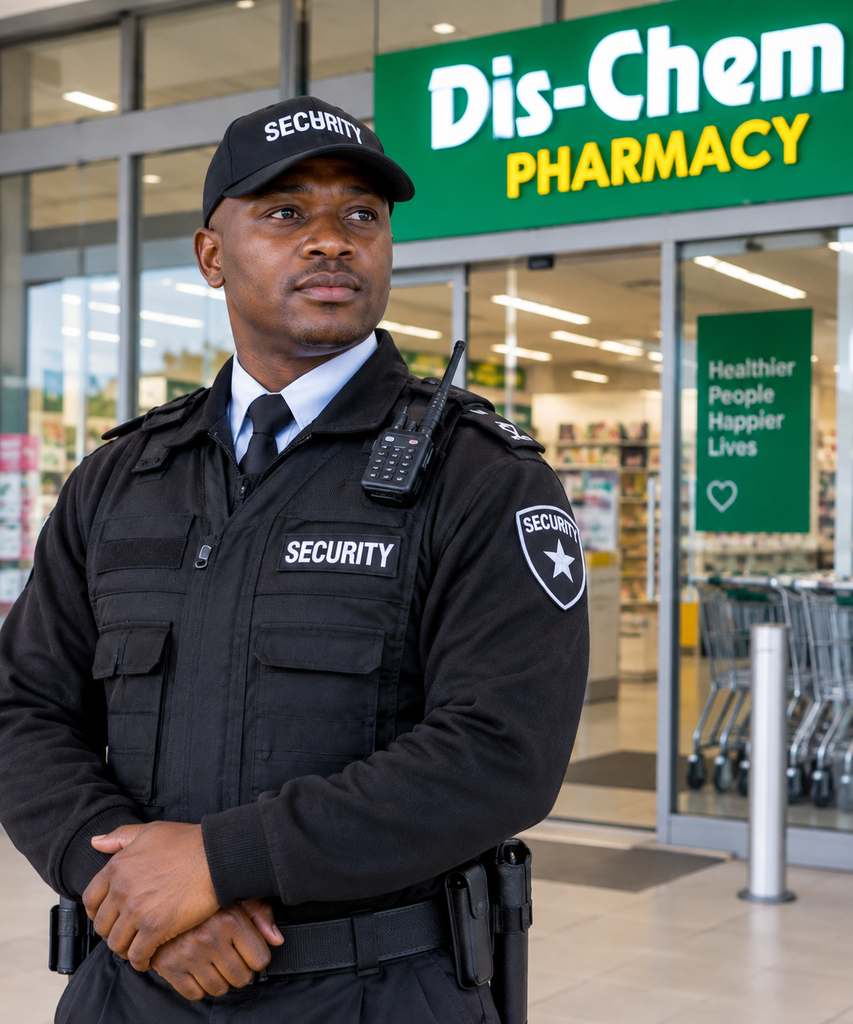
Are you looking for security guard jobs in Springs, Johannesburg, Gauteng? Dis-Chem Pharmacies Limited has advertised a Security Guard – Springs position for candidates interested in working in the retail security environment.
The position is permanent and falls under the Security Category within the retail industry. The vacancy was posted on 8 September 2026, with applications closing on 27 October 2026.
The successful candidate will be responsible for protecting Dis-Chem employees, customers, property and assets by maintaining a safe and secure environment. The role involves access control, patrols, security searches, monitoring CCTV and alarm systems, responding to incidents, maintaining security registers, assisting during emergencies and reporting suspicious activities.
This article provides a detailed overview of the Dis-Chem Security Guard Springs vacancy, including requirements, responsibilities, competencies, employment conditions, benefits, frequently asked questions and likely interview questions and answers.
Company: Dis-Chem Pharmacies Limited Position: Security Guard – Springs Location: Springs, Johannesburg, Gauteng Employment Type: Permanent Industry: Retail Category: Security Experience Level: Entry Level Date Posted: 8 September 2026 Closing Date: 27 October 2026
The primary purpose of the position is to provide a professional security service in accordance with the Private Security Industry Regulations Act 56 of 2001, as amended, as well as Dis-Chem’s internal security procedures.
The security guard will help protect:
Customers
Employees
Company property
Stock and merchandise
Buildings and facilities
Vehicles
Company assets
The successful applicant must be vigilant, professional, physically present at their assigned post and able to respond appropriately to security incidents and emergencies.
What Does a Dis-Chem Security Guard Do?
A Dis-Chem Security Guard is responsible for preventing and detecting criminal activity and maintaining a safe environment within the store or assigned premises.
The position involves much more than simply standing at an entrance.
A security guard may be required to:
Monitor entrances and exits.
Control access to the premises.
Search employees and suppliers according to company procedures.
Conduct vehicle searches.
Conduct regular patrols.
Monitor CCTV cameras.
Monitor alarm systems.
Identify suspicious behaviour.
Prevent theft and damage.
Record incidents.
Complete security registers.
Maintain occurrence books.
Report incidents to management.
Contact police or emergency services when necessary.
Assist during emergencies.
Help manage evacuations.
Monitor opening and closing procedures.
Protect company assets.
Provide security advice.
Maintain a visible security presence.
The position therefore requires a combination of security awareness, communication, customer service, discipline and good judgement.
Minimum Requirements for the Dis-Chem Security Guard Job
Applicants need to meet several essential requirements.
Grade 12 / Matric
Candidates must have:
Grade 12 – Matric or a Senior Certificate.
Applicants should ensure that their CV clearly states their highest school qualification.
Grade C PSIRA Accreditation
One of the most important requirements is:
Grade C accreditation with PSIRA.
PSIRA refers to the Private Security Industry Regulatory Authority, which regulates private security providers in South Africa.
The vacancy specifically requires candidates to be PSIRA registered and to have Grade C PSIRA accreditation.
Applicants should ensure that their PSIRA status and relevant grade are clearly reflected on their CV.
Retail Security Experience
The vacancy requires a general minimum exposure of approximately:
3 years in the retail industry, such as shopping malls and warehouses.
This is particularly important because the position operates in a retail environment where security guards may deal with customers, staff, suppliers, merchandise, vehicles and company property.
Experience in environments such as the following may be relevant:
Retail stores
Shopping centres
Warehouses
Distribution centres
Supermarkets
Pharmacies
Commercial premises
Previous Security Guard Experience
Previous experience in a similar position is listed as advantageous.
The vacancy states that:
At least one year of specific previous experience in a similar role would be advantageous.
Candidates who have worked as security officers or security guards in retail environments should clearly explain their responsibilities on their CV.
Main Duties of a Dis-Chem Security Guard
1. Maintain a Safe and Secure Environment
The primary responsibility is to help create a safe environment for customers, employees and company property.
The security officer must remain alert and identify potential threats before they develop into serious incidents.
2. Conduct Regular Patrols
Security guards must conduct random and regular patrols of the premises.
Patrolling helps:
Deter criminal activity.
Identify security breaches.
Detect damage.
Identify suspicious behaviour.
Check doors and windows.
Monitor areas that may be vulnerable to theft.
Maintain a visible security presence.
A visible security officer can act as a deterrent to potential criminals.
3. Access Control
Access control is a major responsibility.
The security guard must monitor and control people and vehicles entering and leaving the premises.
This may involve:
Checking authorisation.
Monitoring entrances.
Recording visitors.
Controlling supplier access.
Controlling employee access.
Checking vehicles.
Preventing unauthorised entry.
The objective is to ensure that only authorised people gain access to restricted areas.
4. Staff, Supplier and Vehicle Searches
The job specification includes conducting searches of:
Employees
Suppliers
Company merchandisers
Vehicles
Searches must be performed professionally and in accordance with company procedures and applicable legislation.
Security personnel must understand that their authority has limits and that searches must be conducted lawfully and according to established procedures.
5. Monitor CCTV and Alarm Systems
Security guards may be responsible for monitoring:
CCTV cameras
Alarm systems
Emergency equipment
Security detection equipment
They must pay attention to unusual activity and respond according to the relevant procedures.
6. Identify Suspicious Behaviour
A security guard must remain observant and recognise behaviour that could indicate:
Theft
Unlawful entry
Vandalism
Assault
Suspicious activity
Security breaches
Damage to property
Other criminal conduct
The guard must then take appropriate action within their legal authority and company procedures.
7. Report Security Incidents
Any suspicious or unusual incident must be reported to management.
Depending on the circumstances, the security guard may need to provide:
A verbal report.
A written report.
Details of the people involved.
Time and location of the incident.
Description of what happened.
Description of actions taken.
Information about witnesses.
Information required by management or authorities.
Accurate reporting is a critical part of security work.
8. Maintain Security Registers and Occurrence Books
The security guard must maintain and complete relevant:
Registers
Occurrence books
Security records
Incident reports
Records should be accurate, complete and easy to understand.
Security personnel should never knowingly falsify or omit important information.
9. Opening and Closing Procedures
The security guard must be particularly vigilant during opening and closing procedures.
Responsibilities may include checking:
Doors
Windows
Access points
Premises
Security systems
Relevant utilities
The vacancy specifically states that security personnel should ensure doors and windows are locked at the end of the day and that water taps are turned off where applicable.
10. Prevent Theft and Loss
A key objective is protecting Dis-Chem’s assets and merchandise.
The security guard must watch for dishonest or malicious behaviour that could result in financial loss or damage to the business.
This includes being alert to:
Shoplifting
Internal theft
Unauthorised removal of goods
Property damage
Unauthorised access
Suspicious vehicles
Suspicious employees or visitors
11. Cancel Staff Purchases and Goods Declared
The job specification includes responsibilities relating to staff purchases and declared goods.
The security officer may need to verify relevant documentation and ensure that goods leaving the premises comply with Dis-Chem procedures.
This requires attention to detail and integrity.
12. Supervise Refuse Removal
Security personnel may also be required to supervise refuse removal in accordance with Dis-Chem standards.
This can help protect company assets and ensure that security procedures are followed when goods or waste leave the premises.
13. Respond to Emergencies
Security guards may be among the first people to respond when an emergency occurs.
Examples include:
Fire
Medical emergencies
Assault
Robbery
Unlawful entry
Security threats
Other incidents affecting safety
The guard should follow established emergency procedures and contact the appropriate authorities or emergency personnel.
14. Assist With Evacuations
During an evacuation, the security guard may be responsible for helping maintain order.
This can include:
Directing people toward safe exits.
Preventing panic.
Keeping assembly points organised.
Preventing unauthorised entry.
Assisting emergency teams.
Protecting people and property.
The objective is to help ensure an orderly and safe evacuation.
15. Contact Police and Emergency Services
When an incident requires police or emergency intervention, the security guard must contact the appropriate authorities without unnecessary delay.
Examples may include:
Armed robbery.
Serious assault.
Fire.
Serious security breaches.
Dangerous criminal activity.
Other emergencies requiring professional intervention.
Security guards must act within their legal authority and follow company procedures.
16. Provide Security Advice
The position also involves offering ongoing security advice and safety warnings.
A security guard should help identify weaknesses in security procedures and alert management when improvements may be necessary.
Skills Required for a Dis-Chem Security Guard
PSIRA Knowledge
Candidates must have knowledge relevant to PSIRA requirements and the private security industry.
Fire and Health & Safety Knowledge
Exposure to fire emergency procedures and relevant Health and Safety training is listed as essential.
Communication Skills
The position requires candidates to read, write and speak English well.
Good communication is important when:
Dealing with customers.
Speaking to employees.
Communicating with management.
Reporting incidents.
Communicating with police.
Giving emergency instructions.
Observation Skills
A good security guard must be highly observant.
You should be able to identify small changes in the environment and recognise behaviour that may indicate a security risk.
Alertness
Security work requires continuous awareness.
A guard cannot afford to become distracted while responsible for protecting people and property.
Decision-Making
Security officers sometimes need to make quick decisions during incidents.
Good judgement helps ensure that the appropriate response is taken without unnecessarily escalating a situation.
Customer Service
Dis-Chem specifically expects security personnel to maintain good relationships with internal and external customers.
Security guards should therefore be:
Courteous.
Friendly.
Professional.
Approachable.
Helpful.
Being security-conscious does not mean treating every customer as a suspect.
Special Conditions of Employment
Applicants should take note of the special conditions listed in the vacancy.
Candidates must:
Be PSIRA registered.
Have Grade C PSIRA accreditation.
Be South African.
Pass MIE screening.
Have clear criminal and credit records.
A driver’s licence and reliable transport may also be relevant, particularly where the employee is deployed as a driver. The vacancy states that a PDP is required when deployed as a driver.
Salary and Benefits
The vacancy states that the remuneration is:
Market-related salary
Listed benefits include:
Kaelo
Provident Fund (PSSPF)
The exact salary amount is not specified in the vacancy information provided.
Candidates should therefore be cautious about relying on unverified salary figures found elsewhere online.
How to Improve Your CV for the Dis-Chem Security Guard Position
Your CV should be tailored to the vacancy rather than using a generic security CV.
Include Your PSIRA Details
Clearly state:
PSIRA Grade C – Registered
If applicable, include relevant registration information without providing unnecessary confidential information.
Highlight Retail Security Experience
Your employment history should clearly show experience in:
Retail security.
Shopping malls.
Warehouses.
Access control.
Patrols.
CCTV monitoring.
Vehicle searches.
Staff searches.
Incident reporting.
Highlight Emergency Experience
Mention experience involving:
Fire emergencies.
Evacuations.
Medical emergencies.
Security incidents.
Police liaison.
Emergency response.
Include Relevant Computer and Administrative Skills
If you have experience completing:
Occurrence books.
Registers.
Incident reports.
Visitor logs.
Access records.
include it on your CV.
Example CV Profile for a Dis-Chem Security Guard
Professional Profile
Disciplined and vigilant Grade C PSIRA-registered security professional with experience in retail and commercial security environments. Skilled in access control, regular patrols, CCTV and alarm monitoring, staff and vehicle searches, incident reporting and emergency response. Professional and approachable when dealing with customers, employees and suppliers, while maintaining a strong focus on protecting people, property and company assets. Able to remain calm under pressure, follow security procedures and respond appropriately to suspicious activities and emergency situations.
Dis-Chem Security Guard Interview Questions and Answers
Preparing for an interview is important because security positions often include scenario-based questions designed to test judgement, communication and knowledge of security procedures.
Here are potential interview questions and strong sample answers.
1. Tell us about yourself.
Sample Answer
“I am a disciplined, observant and customer-focused security professional. I have experience working in security and understand the importance of access control, patrols, incident reporting and protecting people and property. I am PSIRA Grade C registered and understand the importance of following company procedures and working within the law. I am comfortable working under pressure and dealing professionally with customers, employees, suppliers and management.”
2. Why do you want to work for Dis-Chem?
Sample Answer
“I would like to work for Dis-Chem because it is a large retail organisation where security plays an important role in protecting customers, employees, stock and company property. I believe my security experience, attention to detail and ability to remain vigilant would allow me to contribute positively to the organisation. I am also interested in working in a professional environment where security procedures and customer service are both important.”
3. What are the duties of a security guard?
Sample Answer
“The duties include protecting people and property, controlling access, conducting patrols, monitoring CCTV and alarms, identifying suspicious activity, conducting authorised searches, preventing theft, maintaining security records, reporting incidents and responding appropriately to emergencies. A security guard must also follow company procedures and operate within the legal authority provided by the relevant legislation.”
4. What is PSIRA?
Sample Answer
“PSIRA is the Private Security Industry Regulatory Authority. It regulates the private security industry in South Africa and establishes requirements and standards for security service providers and security officers. As a security officer, it is important to understand and comply with the requirements applicable to my registration and grade.”
5. Why is access control important?
Sample Answer
“Access control helps prevent unauthorised people from entering restricted areas and reduces security risks. It allows security personnel to verify who is entering and leaving the premises and ensures that access is provided only according to company procedures and authorisation.”
6. What would you do if you saw someone behaving suspiciously?
Sample Answer
“I would remain observant and avoid acting recklessly or making assumptions. I would monitor the person’s behaviour, follow the company’s procedures and notify the appropriate supervisor or management when necessary. If intervention were required, I would act within my legal authority and the company’s standard operating procedures. If the situation presented an immediate serious danger, I would contact the appropriate emergency or law-enforcement services.”
7. How would you handle a suspected shoplifter?
Sample Answer
“I would follow the company’s procedures and act within my legal authority. I would remain calm and professional and avoid unnecessarily escalating the situation. I would gather and record the relevant information and involve management or the police where required. My actions would always be based on the applicable law and company procedures.”
8. What would you do during an armed robbery?
Sample Answer
“My priority would be the safety of customers, employees and other people on the premises. I would follow the company’s robbery and emergency procedures, avoid actions that unnecessarily put lives at risk and contact the police or emergency services as soon as it is safe and appropriate to do so. After the incident, I would preserve relevant information, notify management and complete a detailed report according to procedure.”
9. What would you do if a customer became aggressive?
Sample Answer
“I would remain calm and professional and avoid responding emotionally. I would listen to the customer and try to understand the reason for the behaviour. If the situation became threatening, I would follow the appropriate security procedure and request assistance. My objective would be to maintain safety while treating the customer respectfully.”
10. How would you respond to a fire?
Sample Answer
“I would immediately follow the site’s fire emergency procedures. I would alert the appropriate people and emergency services as required, assist with evacuation and direct people toward the designated assembly area. I would help maintain order and prevent people from entering dangerous areas. I would only use emergency equipment where I am trained and authorised to do so.”
11. What would you do if an employee refused to be searched?
Sample Answer
“I would remain professional and explain that the search is part of the applicable company security procedure. I would not become confrontational. If the employee continued refusing, I would follow the escalation procedure and notify the relevant supervisor or management rather than taking inappropriate action myself.”
12. What would you do if a supplier tried to enter without proper authorisation?
Sample Answer
“I would politely stop the person from entering the restricted area and verify the required authorisation. If they could not provide the necessary authorisation, I would follow the site’s access-control procedure and contact the relevant manager or supervisor. I would record the incident if required.”
13. Why are patrols important?
Sample Answer
“Patrols provide visibility and help deter criminal activity. They also allow security personnel to identify damaged property, open doors, suspicious activity, safety hazards and other security problems. Regular patrols therefore help identify risks before they become serious incidents.”
14. What would you do if you discovered an unlocked door after closing?
Sample Answer
“I would immediately follow the site’s security procedure. I would establish whether there were any signs of forced entry or suspicious activity and notify management or the appropriate supervisor. I would ensure the area was secured according to procedure and record the incident accurately.”
15. What information should be included in an incident report?
Sample Answer
“An incident report should contain accurate factual information, including the date, time and location of the incident, what was observed, the people involved where known, witnesses if applicable, actions taken, who was notified and any other relevant information required by company procedure. I would avoid speculation and make sure the report is clear and accurate.”
16. What would you do if you noticed suspicious behaviour from an employee?
Sample Answer
“I would not make accusations without evidence. I would observe and record relevant facts and follow the company’s reporting procedure. If the situation required immediate intervention, I would act within my legal authority and company procedures. I would report the matter to the appropriate manager or supervisor.”
17. How do you remain alert during a long shift?
Sample Answer
“I understand that remaining alert is one of the most important parts of security work. I stay focused on my surroundings, follow the required patrol and monitoring procedures and avoid unnecessary distractions. I also make sure I understand my post instructions and remain attentive throughout the shift.”
18. How would you deal with an emergency when working alone?
Sample Answer
“I would remain calm, assess the situation from a safety perspective and follow the site’s emergency procedures. I would call the appropriate emergency service or management when required and provide clear information about the location and nature of the incident. I would not unnecessarily put myself or others in danger.”
19. What does good customer service mean for a security guard?
Sample Answer
“Good customer service means being professional, respectful, approachable and helpful while still maintaining security standards. A security guard should be able to assist customers with directions or basic queries while ensuring that security procedures are followed.”
20. Why should we hire you?
Sample Answer
“You should hire me because I understand that security requires vigilance, discipline, integrity and good judgement. I can follow procedures, communicate professionally and remain calm under pressure. I understand the importance of protecting customers, employees and company assets while maintaining good customer relations. I am also committed to carrying out my responsibilities professionally and within the law.”
Scenario-Based Security Guard Interview Questions
Scenario 1: You See Someone Enter a Restricted Area
Question: What would you do?
Answer:
“I would verify whether the person is authorised to be there. If they are not authorised, I would follow the site’s access-control procedure and notify the appropriate supervisor or management. I would remain professional and avoid unnecessary confrontation.”
Scenario 2: A Customer Reports a Missing Item
Question: What would you do?
Answer:
“I would listen carefully to the customer and obtain the relevant details. I would notify the appropriate supervisor or manager and follow the store’s procedure for lost property or suspected theft. If CCTV or other security information needed to be reviewed, I would ensure that the appropriate authorised person is notified.”
Scenario 3: You Discover Damage to a Door
Question: What would you do?
Answer:
“I would inspect the situation from a safe position and look for signs of unlawful entry. I would immediately report the damage to management and follow the security procedure. If there was evidence of a serious security breach, I would contact the appropriate authorities as required and complete a detailed incident report.”
Scenario 4: There Is a Fire Alarm
Question: What would you do?
Answer:
“I would follow the site’s fire emergency procedure, alert the appropriate personnel and assist with an orderly evacuation. I would direct people toward the designated assembly area, help prevent panic and keep people away from dangerous areas. I would also ensure that emergency services are contacted according to procedure.”
Questions You Can Ask at the Dis-Chem Interview
At the end of your interview, the interviewer may ask whether you have questions.
Good questions include:
“What does a normal shift look like for a security guard at this site?”
“What security systems and CCTV equipment are used?”
“What training is provided to successful candidates?”
“How is security performance measured?”
“What are the main security challenges at this location?”
“What are the shift arrangements?”
“What are the opportunities for development within the security department?”
These questions show that you are interested in understanding the job rather than simply securing employment.
Frequently Asked Questions About Dis-Chem Security Guard Jobs
Is the Dis-Chem Security Guard position permanent?
Yes. The vacancy is advertised as a permanent position.
Where is the job located?
The position is listed for Springs, Johannesburg, Gauteng.
What qualification is required?
Applicants need Grade 12 / Matric or a Senior Certificate.
Do I need PSIRA registration?
Yes. The vacancy specifically requires candidates to be PSIRA registered and to hold Grade C PSIRA accreditation.
How much security experience is required?
The vacancy requires a general minimum exposure of at least three years in the retail industry, including environments such as shopping malls and warehouses.
Is previous security guard experience required?
At least one year of specific previous experience in a similar role is listed as advantageous.
Do I need retail security experience?
Retail experience is important because the vacancy specifically refers to exposure to the retail industry, including shopping malls and warehouses.
Is English important for this position?
Yes. Candidates must be able to read, write and speak English well.
Do I need fire and health and safety training?
The vacancy lists fire emergency and relevant Health and Safety training and exposure as an essential competency.
Do I need a driver’s licence?
A driver’s licence and own reliable transport are listed as requirements where applicable, particularly for candidates deployed as drivers. A PDP is required when deployed as a driver.
Does the position require a clear criminal record?
Yes. The vacancy states that candidates must undergo MIE screening and have clear criminal and credit records.
What benefits are offered?
The advertised benefits include Kaelo and a Provident Fund (PSSPF). The salary is described as market-related.
When does the vacancy close?
The closing date listed is 27 October 2026.
What happens if I am not contacted after applying?
The vacancy states that only successful applicants will be contacted. If an applicant has not been contacted within two weeks after the closing date, they should consider their application unsuccessful.
SEO Keywords for Dis-Chem Security Guard Jobs
People searching for this vacancy may use terms such as:
Dis-Chem security guard jobs
Dis-Chem security jobs
Security Guard Springs jobs
Security jobs in Springs
Security jobs Johannesburg
Security jobs Gauteng
Dis-Chem jobs 2026
Dis-Chem vacancies
Grade C security jobs
PSIRA Grade C jobs
PSIRA security jobs
Retail security jobs
Security guard vacancies in Gauteng
Permanent security jobs
Security officer jobs Springs
Security guard jobs Johannesburg
Matric security jobs
Security jobs with PSIRA Grade C
Dis-Chem Pharmacies vacancies
Security guard interview questions
Security officer interview questions and answers
How to Prepare for the Dis-Chem Security Guard Interview
Before attending your interview, revise the following areas:
PSIRA
Make sure you understand the basic responsibilities associated with being a registered private security officer and the importance of operating within your legal authority.
Access Control
Be prepared to explain how you would control employees, visitors, suppliers and vehicles entering the premises.
Incident Reporting
Know how to explain the importance of accurate, factual and timely reporting.
Emergency Procedures
Prepare for questions about:
Fire.
Robbery.
Assault.
Unlawful entry.
Medical emergencies.
Evacuation.
Customer Service
Remember that Dis-Chem operates in the retail sector. A security guard is expected to maintain security while remaining professional and courteous toward customers.
Theft Prevention
Be ready to explain how visibility, patrols, access control, searches and observation can help reduce security risks.
Final Advice for Applicants
The Dis-Chem Security Guard – Springs vacancy is suitable for candidates who meet the Matric, PSIRA Grade C and relevant retail-security requirements and who are comfortable working in a busy retail environment.
When applying, make sure your CV clearly highlights your:
Grade 12 / Matric qualification.
PSIRA Grade C accreditation.
Retail security experience.
Security guard experience.
Access-control experience.
Patrol experience.
CCTV and alarm-monitoring experience.
Staff and vehicle search experience.
Incident-reporting experience.
Fire and emergency-response experience.
Customer-service skills.
English communication skills.
Ability to work under pressure.
For the interview, focus on demonstrating integrity, vigilance, professionalism, good judgement, communication and respect for legal and company procedures.
A strong security guard understands that the job is not simply about reacting after an incident has happened. It is about preventing security breaches, identifying risks early, protecting people and property, responding appropriately when incidents occur and accurately reporting what happened afterwards.
With the vacancy closing on 27 October 2026, eligible applicants should ensure that their CV is updated and that their PSIRA credentials and relevant retail-security experience are clearly presented.
Nomcebo Yaka is a South African opportunity curator and digital platform builder dedicated to helping young people access employment and skills development opportunities. Through her social media presence and website, she shares verified job openings, learnerships, and career resources, making it easier for job seekers to stay informed and apply on time.
Driven by a passion for community upliftment, she actively connects unemployed individuals with potential employers and encourages proactive job searching. Her work focuses on bridging the gap between opportunity and access, particularly for youth across South Africa.
Looking for a job at Shoprite, Checkers, or Usave? The Shoprite Group makes it easy to apply for store jobs either through its official careers website or via WhatsApp. Once you register, your profile is added to the Shoprite Talent Pool. Whenever a suitable vacancy becomes available, recruiters can review your application and contact you…
Glencore is currently advertising mining and industrial job opportunities through its global careers platform. The company recruits candidates for roles in mining operations, engineering, logistics, administration, safety, and technical services across South Africa and internationally. 🌍 Why Consider a Career at Glencore? Glencore is one of the world’s largest natural resource companies, operating in mining,…
Are you looking for an entry-level retail job in Gauteng? Dis-Chem Pharmacies Limited is hiring a Merchandiser at its Greenstone store in Edenvale, Gauteng. This is a permanent retail opportunity suitable for candidates who have Grade 12/Matric and an interest in merchandising, customer service and the retail industry. The Merchandiser will play an important role…
South Africa’s retail and FMCG industries continue creating employment opportunities for experienced drivers and operational support workers. As major retailers expand distribution and supply operations, companies continue recruiting professional drivers who can support transport logistics, stock movement, and operational efficiency. One of the latest opportunities available in Gauteng comes from Pick n Pay, which is…
If you are looking for agricultural sales jobs in Mpumalanga, the Fertiliser Sales Agent position at TWK Agri in Secunda could be an excellent opportunity for an experienced agriculture or fertiliser industry professional. The role combines technical agricultural knowledge, customer service, sales, crop management and business development. This detailed guide explains the vacancy, responsibilities, qualifications,…
Young South Africans looking for an opportunity to gain work experience, develop sales skills and earn an income can consider registering for the U-Belong programme. U-Belong is a Learnership and Development programme hosted by T3 Telecoms SA, a South African distribution and technology company operating in the telecommunications sector. According to U-Belong, the programme focuses…