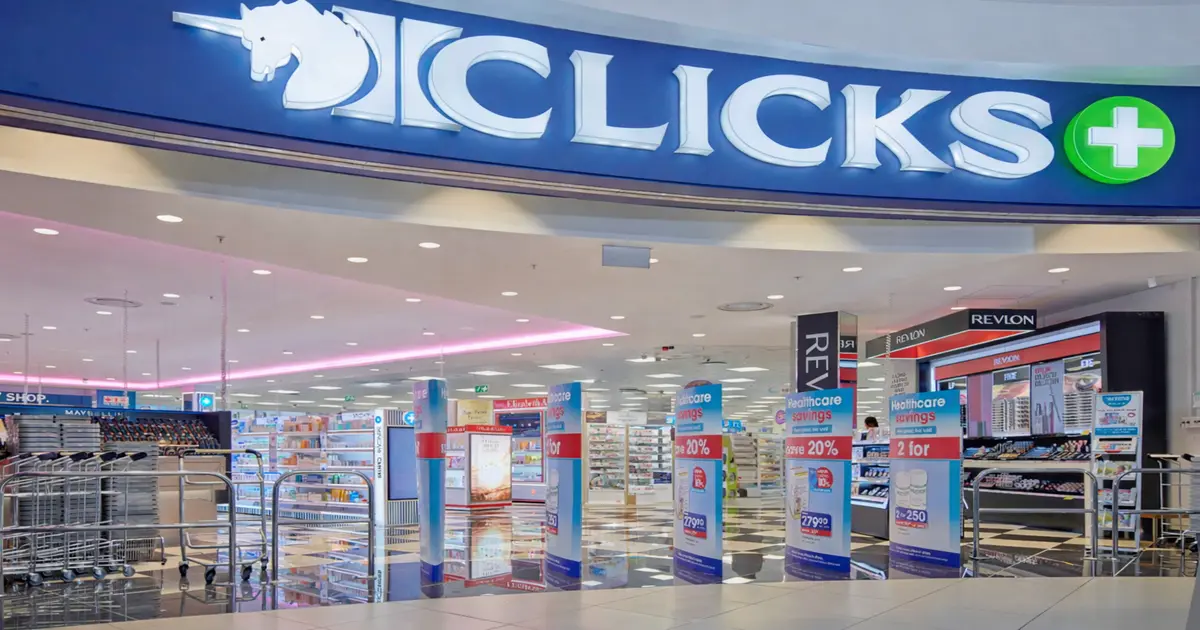
The Clicks Youth Employment Programme 2026 is one of the most practical entry routes into retail for unemployed youth who want real store experience plus a recognised qualification. If you’ve got Matric, you’re between 18–29, and you’re ready to work in a busy customer environment, this programme can help you build your first credible work history.
Clicks confirms the programme combines classroom learning + on-the-job store training, and successful participants receive a NQF Level 2 Checkout Operator occupational qualification. The listing also shows it’s open in Gauteng, with an apply-by date of 5 March 2026 (listing reference click_023966).
(If the Clicks page ever loads slowly, still submit via the official portal first — that’s the source of truth.)
What this programme really is (so you don’t apply with the wrong expectations)
This is not just “a short job” — it’s structured training that aims to turn an unemployed applicant into someone who can operate in retail professionally.
Clicks states the programme includes:
Classroom learning (training sessions)
Practical store training (real work in a retail environment)
A qualification outcome: NQF Level 2 Checkout Operator
That qualification matters because it’s something you can list on a CV and use when applying for: cashier roles, store assistant roles, retail operations support, and other entry-level FMCG/retail jobs.
Who qualifies for the Clicks Youth Employment Programme 2026 (Gauteng)
Clicks’ “knock-out” requirements are straightforward:
You qualify if you:
Are a South African citizen
Are 18–29 years old
Have passed Matric
Are unemployed
Have strong communication + people skills
Can work in a team and are willing to learn
Are not currently registered on another learnership or skills programme
Who should apply (my analysis)
This programme is best for you if:
You need your first credible work experience (even if you’ve never worked)
You can handle a customer-facing environment (queues, pressure, busy days)
You want a retail career path, even if you’re not sure yet what role you want long-term
If you strongly dislike serving the public, struggle with conflict, or can’t commit to fixed schedules, you’ll likely hate retail operations — and that shows in performance.
Retail youth programmes at big brands are usually high competition because:
Matric is common
Many applicants are unemployed
The programme offers both training + experience
So don’t treat this like “one quick application”. Treat it like a competitive intake where small quality signals matter (CV clarity, documents, professionalism).
What can disqualify you (most common reasons people lose these chances)
Even if you meet the age and Matric requirements, applicants get filtered out for avoidable reasons. Based on the rules stated in the listing + how large intakes usually screen, the most common disqualifiers are:
Not meeting the basics
Not Matric, age outside range, not SA citizen, not unemployed.
Being enrolled in another learnership/skills programme Clicks is clear: if you’re currently registered elsewhere, you don’t qualify.
Inconsistent information If your CV, application form, and documents don’t match (dates, names, ID digits), you can be dropped during verification.
Poor document quality Blurry uploads, missing pages, wrong file type — these are “easy rejects” when there’s high volume.
Unprofessional communication If you get contacted and respond late, or your email address looks unserious, it hurts your chances.
What to prepare before you apply (so you move faster than other applicants)
Have these ready as clean PDFs:
South African ID
Matric certificate (or statement of results if acceptable on the portal)
CV (1–2 pages)
Any short certificates (basic computer, customer service) only if real
CV angle that works for retail
Even with zero experience, you can still show:
reliability (attendance, responsibilities)
communication (school projects, presentations)
teamwork (sports, group work, community involvement)
basic numeracy + accuracy (important for checkout environments)
Application strategy (simple but effective)
Strategy that wins in high-volume intakes:
Apply early (don’t wait for the last day).
Upload clean PDFs with clear names like:
ID-YourName.pdf
Matric-YourName.pdf
CV-YourName.pdf
Make your CV retail-friendly:
Put Matric + subjects clearly
Add “Skills” that match checkout work: accuracy, customer service, teamwork, punctuality
After applying, check email daily (including spam).
Tips to improve your selection chances (without lying or over-optimising)
Add a 2–3 line profile at the top of your CV:
“Matric graduate, available immediately, looking to build retail experience and complete a NQF Level 2 qualification.”
If you have any community involvement, list it (church youth, sports volunteering, school leadership).
If you’ve ever handled money (even informal), describe it honestly:
“Assisted with event ticket sales and cash counts under supervision.”
Be realistic about location and transport:
If you can’t commute reliably, retail is harsh about punctuality.
Why this post structure is Discover-aligned (February 2026 update)
Discover has been emphasising content that’s less clickbait, more trustworthy, and more useful to the reader (clear dates, specifics, “what to do next”, practical guidance). That’s exactly why this guide goes beyond a basic listing.
Clicks Youth Employment Programme 2026
Frequently Asked Questions (FAQ)
1) Is the Clicks Youth Employment Programme 2026 paid?
The listing confirms a fixed-term programme with training + workplace experience, but doesn’t clearly state a stipend amount on the public pages we can view. Apply via the official portal and check the offer details if shortlisted.
2) What qualification do you get?
Clicks states successful participants receive a NQF Level 2 Checkout Operator occupational qualification.
3) Can I apply if I’m studying?
The listing says you must not be currently registered on another learnership or skills programme. If you are registered, you may be ineligible.
4) What’s the deadline?
The listing shows: Apply by 5 March 2026 (reference click_023966).
5) What’s the biggest mistake applicants make?
Submitting an application with missing/unclear documents, or applying even though they don’t meet the core criteria (age/Matric/unemployed/not registered elsewhere).
Nonhlanhla Ndlovu is the founder and publisher of EduFeeds, a South Africa–focused platform that shares verified learnerships, internships, bursaries, and job opportunities for young people and job seekers.
With a strong focus on helping South African youth access real career opportunities, Nonhlanhla researches and verifies programmes from official company sources and public announcements before publication. EduFeeds aims to simplify the application process by providing clear guidance, requirements, and practical tips to help applicants apply with confidence.
Nonhlanhla continues to monitor updates from SETAs, companies, and training providers to ensure information on Edu Feeds remains current and useful. She focuses on publishing timely and accurate opportunity updates for the South African youth employment market.
The Skills Development Corporation (SDC) has officially opened its 2026 Learnership intake, providing a critical lifeline for unemployed South Africans looking to escape the “no experience” trap. With a competitive R5,000 monthly stipend and a focus on high-demand skills like IT and Business Administration, this program is designed to turn entry-level candidates into marketplace assets…
A Powerful Entry Point Into the Shipping and Logistics Industry South Africa’s logistics and shipping sector plays a critical role in the economy—connecting local industries to global markets. For young people looking to break into this high-demand field, the Shipping Learnership: Supply Chain Practitioner 2026 offers a valuable opportunity to gain real-world experience. Offered by…
Last verified: March 2026Closing date: 06 March 2026Location: Pretoria, GautengPositions: 3Duration: 12 monthsMonthly stipend: R8,000 Why this SABS internship is attracting strong competition in 2026 With only three positions available and a strict minimum 80% academic average, the SABS Youth Development Programme 2026: Supply Chain Management is shaping up to be one of the more…
Boilermaker Learnerships 2026: Stratism Entry-Level Training for Skilled Trades For many young South Africans, breaking into the engineering and fabrication industry feels out of reach. Qualifications cost money, experience is required, and opportunities often seem limited. The Stratism Boilermaker Learnerships 2026 could change that reality for those ready to start from the ground up. As…
The South African Forestry Company SOC Limited (SAFCOL) has officially opened applications for the SAFCOL YES Internship Programme 2026, offering unemployed graduates and artisans a paid 12-month work experience opportunity across several professional fields. This programme provides a monthly stipend of R5,000, hands-on workplace exposure, and placements in Gauteng, Mpumalanga, and Limpopo. Applications close on…
Tusanang Learnerships 2026: Free Skills Development Opportunities The Tusanang Learnerships 2026 are now open, offering free, accredited skills training to unemployed South African youth who want to improve their employability and gain real workplace experience. Designed to bridge the gap between basic education and job readiness, these learnerships combine theoretical training with practical exposure in…