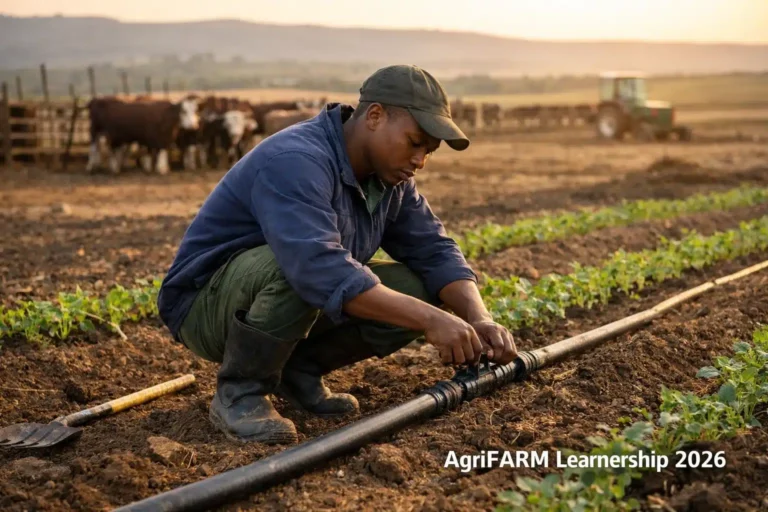
South Africa’s youth unemployment crisis is no longer just a statistic — it is lived daily by millions of young people sending CVs that go unanswered. For many, the problem is not effort or ambition, but the absence of work-ready skills employers are looking for. In this reality, SETA Learnerships 2026continue to stand out as one of the most practical and accessible pathways into employment.
By combining accredited training, real workplace exposure, and a monthly stipend, SETA learnerships offer more than theory. They offer a structured way to gain experience while earning enough to cover basic needs. For unemployed youth with Grade 11 or higher, these programmes remain a realistic bridge between education and work.
This guide explains how SETA learnerships work in 2026, what they pay, who qualifies, and which sectors offer the strongest opportunities.
What SETA Learnerships Are — and Why They Still Matter in 2026
A SETA learnership is a formal training programme that blends classroom learning with hands-on workplace experience. Learners spend part of their time studying theory and the rest applying those skills at a host employer.
All SETA learnerships are registered on the National Qualifications Framework (NQF), meaning the qualification earned is nationally recognised. This allows learners to use their certification across industries and provinces, not just at one company.
Each learnership is overseen by a Sector Education and Training Authority (SETA), such as those responsible for finance, manufacturing, ICT, agriculture, or energy. Their role is to ensure that training matches real labour market needs — not outdated curricula.
In 2026, this alignment matters more than ever. Employers are increasingly selective, and experience is often required even for entry-level roles. Learnerships help close that gap.
Monthly Stipends: What Learners Can Realistically Expect
One of the biggest concerns for unemployed youth is affordability. SETA learnerships address this through a monthly stipend, which supports learners while they train.
Most stipends in 2026 range between R3,000 and R5,000 per month, depending on the SETA, qualification level, and employer. The stipend is not a salary, but it helps cover essentials such as:
Transport to training or work sites
Food and daily expenses
Data or communication costs
In many programmes, learners receive a full stipend during workplace days and a reduced amount during classroom-only periods. Some host employers also provide uniforms or transport support.
Learners who manage their stipend carefully — prioritising essentials rather than extras — are more likely to complete the programme without disruption.
Who Qualifies for SETA Learnerships in 2026?
Minimum Education Requirements
Most SETA learnerships require Grade 11 as a minimum, although certain sectors may prefer Matric or specific subjects. This lower entry barrier makes learnerships accessible to young people who did not complete school but are ready to work and learn.
Matching your school subjects to the sector can improve your chances:
Mathematics and Physical Science support engineering and manufacturing roles
English and Accounting are useful for finance and administration programmes
Age and Citizenship Criteria
Applicants must:
Be 18 years or older at the start of the programme
Be a South African citizen or permanent resident
A valid South African ID is essential, as learnerships are governed by formal contracts.
Personal Qualities Employers Value
Beyond certificates, employers look for reliability, willingness to learn, and basic communication skills. Many programmes include aptitude tests or short interviews, where attitude often matters more than perfect answers.
High-Demand SETA Sectors to Watch in 2026
Some sectors continue to show stronger employment outcomes than others:
ICT and Digital Skills (MICT SETA) Learnerships in IT support, software development, data administration, and digital marketing remain in high demand as businesses digitise operations.
Manufacturing and Engineering (merSETA) Technical and artisan-related learnerships support industrial growth and exports, especially in automotive and processing industries.
Opportunities are available across provinces. Applying locally can reduce costs and increase the likelihood of long-term employment through local networks.
How to Apply for SETA Learnerships in 2026
Step-by-Step Application Process
Monitor official SETA websites and employer career pages
Register on approved recruitment portals
Complete the online application form carefully
Upload all required documents
Submit before the closing date
Private companies often host SETA-funded learnerships, so checking both public and private listings is important.
Required Documents Checklist
Certified copy of South African ID
Certified Grade 11 or Matric certificate
Updated CV
Proof of residence
Certification usually must be within three months. Missing documents remain one of the most common reasons applications are rejected.
Final Thoughts: Why SETA Learnerships Still Matter
SETA Learnerships 2026 are not quick fixes. They require commitment, discipline, and patience. But for many young South Africans, they remain one of the few structured pathways that offer skills, income support, and real workplace experience at the same time.
For youth facing repeated rejection in the job market, a learnership can be the first step toward stability, confidence, and long-term employment. Applied for early and taken seriously, it can change the direction of a career.
Frequently Asked Questions
Are SETA learnerships free to apply for?
Yes. Legitimate SETA learnerships never charge application or training fees.
Can I apply if I already have a qualification?
Yes, depending on the programme and funding rules.
Do SETA learnerships guarantee a job?
No, but many learners are absorbed by host employers after completion.
How long do SETA learnerships last?
Most programmes run for 12 months, depending on the qualification.
Nonhlanhla Ndlovu is the founder and publisher of EduFeeds, a South Africa–focused platform that shares verified learnerships, internships, bursaries, and job opportunities for young people and job seekers.
With a strong focus on helping South African youth access real career opportunities, Nonhlanhla researches and verifies programmes from official company sources and public announcements before publication. EduFeeds aims to simplify the application process by providing clear guidance, requirements, and practical tips to help applicants apply with confidence.
Nonhlanhla continues to monitor updates from SETAs, companies, and training providers to ensure information on Edu Feeds remains current and useful. She focuses on publishing timely and accurate opportunity updates for the South African youth employment market.
For many young South Africans, finding work after school is not just difficult — it feels impossible. Even those willing to start at entry level are often blocked by one thing they cannot control: lack of experience. With youth unemployment still one of the country’s most pressing challenges, practical skills programmes have become a lifeline…
For thousands of young South Africans, unemployment is not about laziness or lack of ambition. It is about access — access to skills training, access to real experience, and access to financial support while learning. As living costs rise and job opportunities shrink, many youth are locked out before they even begin. The opening of…
For many young South Africans, the search for work doesn’t fail because of laziness or lack of interest — it fails because opportunities are scarce, especially outside major cities. While some industries slow down, agriculture continues to quietly absorb skills, labour, and ambition. In that reality, programmes that combine training with income support can make…
Nedbank YES Programme in South Africa 2026 Opens for Youth Applications Nedbank has once again said YES to youth employment by participating in the Youth Employment Service (YES) Programme 2026, a national initiative aimed at tackling youth unemployment in South Africa. The Nedbank YES Programme in South Africa 2026 provides unemployed young people with the…
If you’re unemployed and trying to get into the working world in 2026, the TSN Learnership 2026 (Grade 11 Accepted) is the type of opportunity you should treat like a real job application—not a quick form you submit and forget. Why? Because learnerships attract thousands of applicants. And most people don’t lose because they’re “not…
Most young people in South Africa are applying for jobs the wrong way. They scroll through vacancies, send applications, and wait… often with no response. But what many don’t realise is this: 👉 There’s a system designed to help you gain skills, earn money, and enter the job market faster — and most people are…