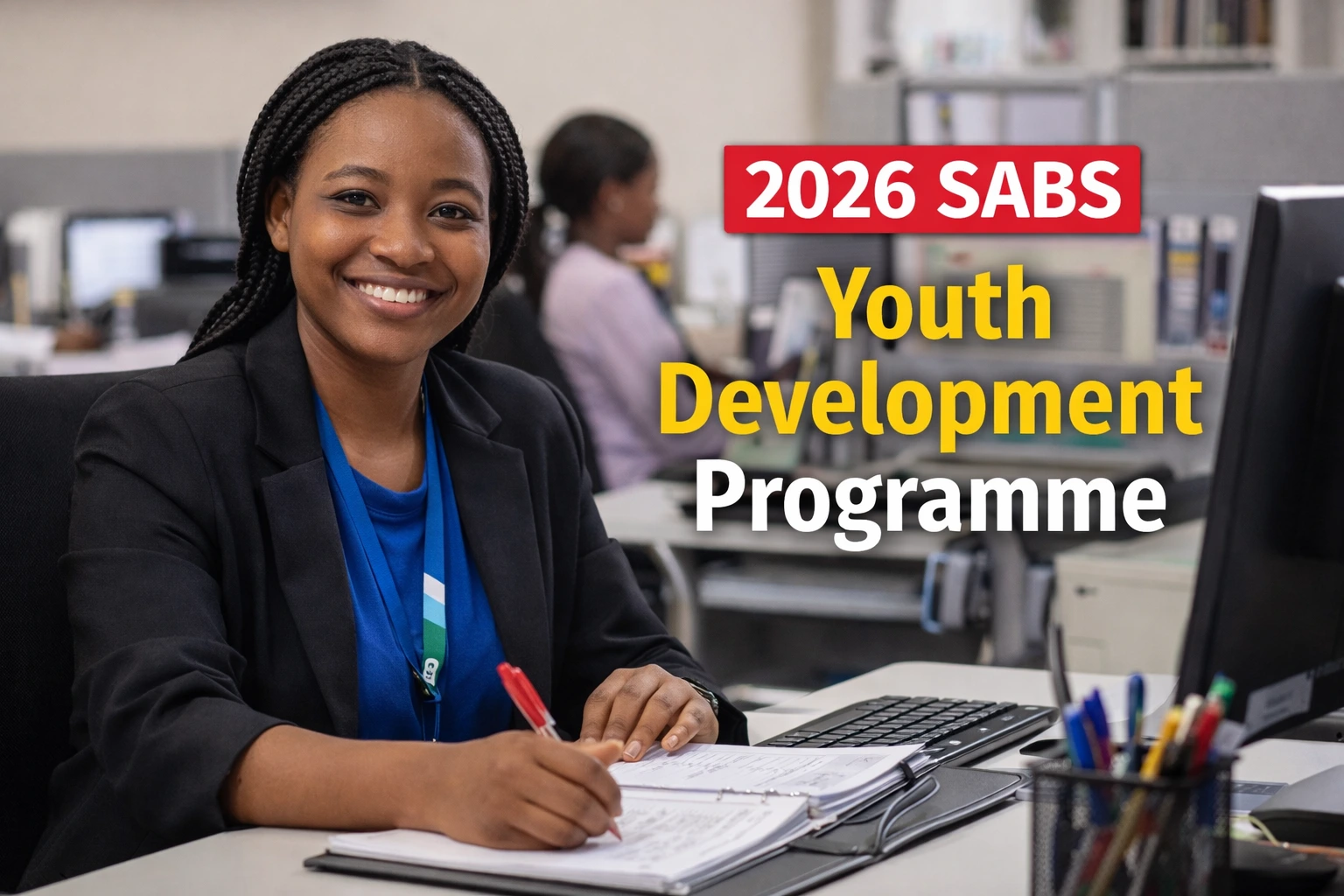
The South African Bureau of Standards (SABS) is inviting unemployed graduates to apply for this 12-month fixed-term development programme, which begins in April 2026. The programme is designed to give structured workplace exposure aligned with national skills priorities.
For graduates targeting careers in procurement, logistics planning, supplier management, or supply chain analytics, this internship can add credible public-sector experience to your CV — but only applicants who fully meet the screening criteria are likely to progress.
To be considered, applicants must meet all of the following:
South African citizen
Aged between 18 and 35
Completed a relevant Bachelor’s degree or Advanced Diploma
Minimum 80% academic average for the completed qualification
No formal work experience related to the field of study
Currently unemployed
⚠️ Important: The 80% academic average is the single biggest screening filter. Applications below this threshold are unlikely to pass initial review.
Why the 80% average matters (insider context)
Public-sector graduate programmes often use high academic thresholds to manage application volume and shortlist candidates with strong analytical discipline.
In supply chain environments — especially within standards and assurance bodies like SABS — accuracy, compliance awareness, and attention to detail are critical. High academic performance is often used as an early proxy for these traits.
This does not guarantee selection, but falling below the threshold usually prevents progression.
Who may be disqualified (common rejection triggers)
SABS clearly notes that incomplete or inaccurate applications can be rejected at any stage.
Immediate disqualification risks
You are likely to be filtered out if:
required documents are missing (CV, certified ID, certified qualifications)
you apply after the closing date
your qualification is not relevant to the supply chain stream
your academic average is below 80%
you have formal work experience in the same field
your profile shows current employment
Later-stage disqualification risks
Even shortlisted candidates may be removed if:
qualification verification fails
academic results cannot be confirmed
information provided is inaccurate or misleading
Meeting minimum requirements does not guarantee selection.
✅ Who should apply (EduFeeds analysis)
This internship best suits graduates who:
achieved a strong academic record (80%+ average)
want structured exposure to procurement and supply chain processes
are comfortable working with policies, documentation, and compliance frameworks
have strong attention to detail
can follow procedures consistently
want a credible entry point into public-sector or corporate supply chain roles
Consider alternatives if:
you prefer physically intensive logistics or warehouse roles
you already have full-time supply chain work experience
your academic average is below the stated threshold
Competition level: what to realistically expect
Competition level: Very high
Key reasons:
only three positions are available
SABS is a nationally recognised standards body
the R8,000 monthly stipend is attractive for graduates
the 80% filter concentrates the pool into high-performing candidates
In previous public-sector graduate intakes, programmes with fewer than five positions typically attract several hundred qualified applications. This means presentation quality and verification readiness matter significantly.
✅ Tips to improve your selection chances
1) Surface your academic average clearly
Do not make reviewers search for it.
Place near the top of your CV (if accurate):
Academic average: 82%
Also include a certified transcript to support the claim.
2) Demonstrate supply chain relevance without claiming work experience
Since the programme requires no formal related work experience, focus on academic and project evidence such as:
procurement or logistics case studies
operations or supply chain research projects
inventory simulations
Excel or data analysis coursework
student leadership involving budgeting or coordination
3) Highlight reliability and discipline
Internship selectors look for consistency signals. Useful proof points include:
meeting strict academic deadlines
coordinating group submissions
managing documentation or reporting tasks
class representative or committee responsibilities
4) Submit clean, certified documents
Avoid common technical issues:
dark phone photos
cut-off certification stamps
mixed file formats
unclear scans
Use properly labelled PDFs.
✅ Common mistakes that weaken strong applications
omitting qualification details (institution + year completed)
submitting uncertified documents
applying despite not meeting the 80% requirement
using a generic CV unrelated to supply chain work
inconsistent dates between CV and qualifications
incomplete online profiles
✅ Smart application strategy
Step 1: Run a strict self-check
Before applying, confirm:
you are currently unemployed
you fall within the 18–35 age band
your academic average is truly 80%+
you have no formal supply chain work experience
If any of these fail, your chances are extremely limited.
Step 2: Prepare a verification-ready document pack
Have these ready:
updated CV (PDF)
certified South African ID
certified qualification certificate(s)
certified academic transcript
Step 3: Align your CV language carefully
Reflect relevant capability signals such as:
procurement support
supplier documentation
reporting and data accuracy
administrative coordination
compliance awareness
stakeholder communication
Avoid copying the advert wording directly — keep it natural.
Step 4: Apply before the deadline
Closing date: 06 March 2026 Late applications will not be considered.
SABS states that by submitting your application you consent to the collection and processing of your personal information for recruitment purposes in line with POPIA.
This is standard for public-sector recruitment and is why certified documentation is required during screening.
SABS Youth Development Programme 2026 Supply Chain Management
FAQ: SABS Youth Development Programme 2026 (Supply Chain)
When does the programme start?
April 2026.
What is the monthly stipend?
R8,000 for the duration of the programme.
How long is the internship?
12 months fixed term.
Where is the internship based?
Pretoria, Gauteng.
How many positions are available?
Three positions.
Do I need work experience?
No — the programme specifically requires no formal work experience related to the field.
What if I don’t hear back?
If no feedback is received within 30 days after the closing date, consider your application unsuccessful.
Are graduates with disabilities encouraged to apply?
Yes — SABS encourages applications from graduates with disabilities.
Nonhlanhla Ndlovu is the founder and publisher of EduFeeds, a South Africa–focused platform that shares verified learnerships, internships, bursaries, and job opportunities for young people and job seekers.
With a strong focus on helping South African youth access real career opportunities, Nonhlanhla researches and verifies programmes from official company sources and public announcements before publication. EduFeeds aims to simplify the application process by providing clear guidance, requirements, and practical tips to help applicants apply with confidence.
Nonhlanhla continues to monitor updates from SETAs, companies, and training providers to ensure information on Edu Feeds remains current and useful. She focuses on publishing timely and accurate opportunity updates for the South African youth employment market.
If you’re looking for a paid workplace placement to complete your qualification, the Mintek Work Integrated Learner 2026 opportunity is a serious option—especially for students in Electronics or Electrical Engineering who need in-service/workplace learning (WIL) to graduate. Mintek confirms the purpose is to give practical experience to students who require workplace exposure to complete their…
Quest Learnership Programme 2026: Important Details and Eligibility Requirements The Quest Learnership Programme 2026 is now open for applications, offering unemployed South African youth a structured entry into engineering and technical careers. Based in Chloorkop, Johannesburg, this 12-month learnership combines accredited classroom training with practical workplace exposure — giving participants both theoretical knowledge and real…
For many young South Africans with a passion for aircraft and engineering, aviation can feel like an unreachable dream. Training is expensive, entry-level roles are limited, and experience is often required before doors will open. The SAA Technical Apprenticeship & Learnership Programme 2026 offers something rare — a structured, credible pathway into the highly specialised…
If you’re unemployed and looking for real workplace experience that can open doors in the FMCG and operations sector, the Sea Harvest Learnership 2026 (R5,700/Month Stipend) is the type of opportunity you should take seriously — especially if you live near Saldanha, Western Cape. Sea Harvest is one of South Africa’s best-known seafood and FMCG…
South Africa is witnessing a major expansion in youth training and employment opportunities this February, with over 400 learnerships launched nationwide across multiple sectors. These initiatives aim to empower young South Africans with critical workplace skills while tackling the persistent challenge of youth unemployment. The large-scale rollout involves private companies, retail giants, financial institutions, manufacturing…
If you’re an aspiring artisan looking to gain real industrial experience, the PepsiCo Apprenticeship Olifantsfontein 2026 could be one of the most practical entry points into South Africa’s manufacturing and supply chain sector. PepsiCo has opened two temporary apprenticeship positions at its Olifantsfontein Cereals Plant, offering structured technical training that combines classroom learning with hands-on…