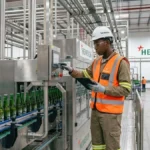
Access to practical work experience remains one of the biggest challenges for young people entering the South African job market. While many individuals complete secondary education, a lack of workplace exposure often limits employment opportunities.
Learnership programmes are designed to address this gap by combining structured learning with hands-on training. These programmes allow participants to develop industry-relevant skills while earning a monthly stipend.
The Packaging Learnership 2026 is one such opportunity within the manufacturing sector. It provides participants with practical training in packaging operations, exposure to real production environments, and a pathway to a nationally recognised qualification.
This article provides a detailed overview of the programme, including eligibility requirements, expected learning outcomes, application steps, and potential career pathways.
The Packaging Learnership 2026 is a structured training programme aligned with South Africa’s National Qualifications Framework (NQF). It is designed to introduce participants to the technical and operational aspects of packaging within manufacturing environments.
Key Programme Details
Feature
Description
Programme Name
Packaging Learnership 2026
Monthly Stipend
R4200
Minimum Education
Grade 11 or higher
Age Requirement
18 years or older
Qualification Outcome
NQF Level 2 or Level 3
Industry
Manufacturing and Packaging
Application Method
Online or email submission
Closing Period
Expected end of May 2026
Location
Various locations across South Africa
Understanding How Learnerships Work
Learnerships are formal training programmes that integrate theoretical learning with practical workplace experience. They are regulated within South Africa’s skills development framework and are often supported by Sector Education and Training Authorities (SETAs).
Core Components of a Learnership
Theoretical Training Participants receive structured instruction on industry concepts, processes, and safety standards.
Workplace Experience Learners apply their knowledge in real production environments under supervision.
Assessment and Certification Progress is evaluated through assignments, practical assessments, and logbooks.
This dual approach ensures that learners gain both knowledge and practical competence.
The Role of Packaging in the Manufacturing Industry
Packaging plays a critical role in product distribution and supply chain operations. It ensures that products are protected, labelled correctly, and ready for transport and retail.
Key Functions of Packaging
Protecting products during storage and transportation
Ensuring compliance with safety and hygiene standards
Supporting branding and product identification
Facilitating efficient logistics and distribution
Industry Relevance
The packaging sector supports multiple industries, including:
Food and beverage manufacturing
Consumer goods production
Pharmaceutical distribution
Retail and e-commerce supply chains
As these industries continue to grow, the demand for skilled packaging workers remains consistent.
Financial Support: Understanding the R4200 Monthly Stipend
Participants in the Packaging Learnership receive a monthly stipend of approximately R4200. This financial support is intended to assist learners while they complete the programme.
Purpose of the Stipend
The stipend helps cover essential expenses such as:
Official job portals or training provider platforms
Applicants should ensure that they apply through verified and legitimate channels.
Step 3: Submit Before the Deadline
Applications are expected to close at the end of May 2026.
Submitting early is recommended, as some programmes may close once sufficient applications are received.
Selection Process
The selection process may involve multiple stages.
Common Assessment Methods
Basic aptitude or reasoning tests
Short interviews
Evaluation of communication skills
Review of motivation and interest in the field
What Employers Look For
Ability to follow instructions
Positive attitude toward learning
Willingness to work in a structured environment
Training and Certification
Upon successful completion of the programme, learners receive a qualification aligned with the National Qualifications Framework.
Qualification Outcome
NQF Level 2 or Level 3 in Packaging or Manufacturing
This qualification demonstrates competency in entry-level manufacturing roles and improves employability.
Career Opportunities After Completion
Completing a packaging learnership can open pathways to various roles within the manufacturing and logistics sectors.
Entry-Level Positions
Packaging Machine Operator
Production Assistant
Quality Control Assistant
Warehouse Assistant
Logistics Support Staff
Long-Term Career Growth
With experience and further training, individuals may progress to roles such as:
Production Supervisor
Maintenance Technician
Operations Coordinator
Employment Potential
While employment is not guaranteed, many companies consider high-performing learners for permanent positions.
Importance of Learnerships in South Africa
Learnerships play a key role in addressing skills shortages and improving youth employment.
Benefits for Learners
Access to structured training
Workplace experience
Recognised qualifications
Financial support during training
Benefits for the Economy
Development of skilled workforce
Improved productivity in key industries
Reduced unemployment rates
Frequently Asked Questions (FAQs)
1. Who can apply for the Packaging Learnership 2026?
South African citizens aged 18 or older with at least Grade 11 can apply.
2. Is prior work experience required?
No. Learnerships are designed for individuals without prior industry experience.
3. How much is the stipend?
Participants receive approximately R4200 per month.
4. What qualification will I receive?
Learners typically receive an NQF Level 2 or Level 3 qualification.
5. When do applications close?
Applications are expected to close at the end of May 2026.
Final Considerations
The Packaging Learnership 2026 offers a structured entry point into South Africa’s manufacturing sector. By combining training, workplace experience, and financial support, the programme provides a practical pathway for individuals seeking to build technical skills.
Applicants are encouraged to:
Prepare documents early
Submit applications before deadlines
Ensure all information is accurate
Conclusion
The Packaging Learnership 2026 is designed to support skills development and improve employability within the manufacturing industry. With a monthly stipend of R4200 and a recognised qualification, the programme offers both practical and financial benefits.
For individuals interested in entering the manufacturing sector, this learnership provides a clear and structured starting point.
Nonhlanhla Ndlovu is the founder and publisher of EduFeeds, a South Africa–focused platform that shares verified learnerships, internships, bursaries, and job opportunities for young people and job seekers.
With a strong focus on helping South African youth access real career opportunities, Nonhlanhla researches and verifies programmes from official company sources and public announcements before publication. EduFeeds aims to simplify the application process by providing clear guidance, requirements, and practical tips to help applicants apply with confidence.
Nonhlanhla continues to monitor updates from SETAs, companies, and training providers to ensure information on Edu Feeds remains current and useful. She focuses on publishing timely and accurate opportunity updates for the South African youth employment market.
MSC Learnership Programme 2026: Structure, Requirements and How to Apply The MSC Learnership Programme 2026 is officially open for applications, offering young South Africans a structured pathway into the maritime and international trade sector. If you are under 25 years old, have completed Matric with Mathematics, and are interested in logistics, freight forwarding, and global…
For many young South Africans, finding work after school is not just difficult — it feels impossible. Even those willing to start at entry level are often blocked by one thing they cannot control: lack of experience. With youth unemployment still one of the country’s most pressing challenges, practical skills programmes have become a lifeline…
AVBOB Long Term Insurance Unemployed Learnership 2026 in partnership with INSETA, registered at NQF Level 4 (140 credits). If you’ve been trying to break into insurance but keep hitting the “experience required” wall, this type of learnership is one of the most practical ways in—because it combines accredited theory training with workplace experience, and it…
When learning and earning must happen together For many young South Africans, the biggest obstacle is not motivation but money. Studying full-time without income is simply not an option, especially in households where every rand matters. That’s why the opening of the Packaging Learnership 2026 is drawing attention. This programme offers something practical: a R4,800…
For millions of young South Africans, the struggle to find work is not about effort or ambition. It is about access — access to experience, access to employers willing to train, and access to income while learning. As unemployment continues to weigh heavily on people under 35, structured learnerships remain one of the few realistic…
If you’re unemployed and looking for real workplace experience that can open doors in the FMCG and operations sector, the Sea Harvest Learnership 2026 (R5,700/Month Stipend) is the type of opportunity you should take seriously — especially if you live near Saldanha, Western Cape. Sea Harvest is one of South Africa’s best-known seafood and FMCG…