For many South Africans entering the job market, gaining practical work experience remains one of the biggest challenges. While formal education provides a foundation, employers often prioritise candidates who can demonstrate workplace readiness—especially in customer-facing roles.
Learnership programmes offer a structured way to bridge this gap. By combining theoretical training with practical skills development, they provide an accessible pathway into employment.
This article provides a detailed and accurate overview of the programme, including requirements, learning outcomes, career opportunities, and application guidance.
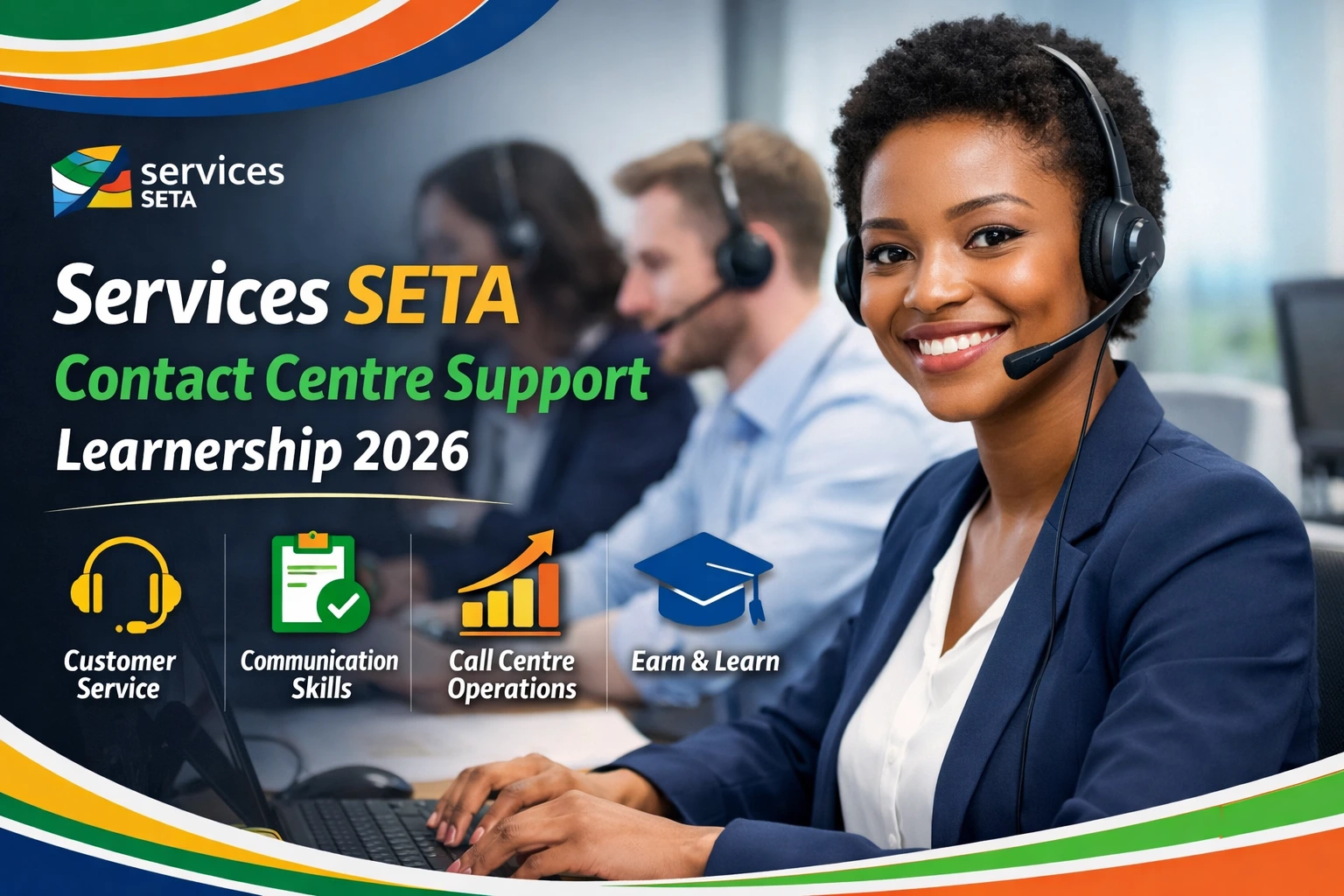
Services SETA Contact Centre Support Learnership 2026
Frequently Asked Questions (FAQs
1. Is this learnership paid?
Some learnerships include a stipend, depending on the provider.
2. Do I need experience?
No. It is designed for entry-level applicants.
3. What qualification will I receive?
A National Certificate: Contact Centre Support (NQF Level 2).
4. Can I study further after completion?
Yes. The qualification can support further studies in customer service or business.
5. How long does it take?
The programme runs for 12 months.
Final Thoughts
The Services SETA Contact Centre Support Learnership 2026 provides a structured pathway into customer service and support roles. By combining formal training with practical skills development, it helps learners build a foundation for employment.
While it is not a guarantee of immediate employment, it offers:
Recognised certification
Practical skills
Improved employability
For individuals seeking entry into the service sector, this type of programme represents a practical starting point.
Nonhlanhla Ndlovu is the founder and publisher of EduFeeds, a South Africa–focused platform that shares verified learnerships, internships, bursaries, and job opportunities for young people and job seekers.
With a strong focus on helping South African youth access real career opportunities, Nonhlanhla researches and verifies programmes from official company sources and public announcements before publication. EduFeeds aims to simplify the application process by providing clear guidance, requirements, and practical tips to help applicants apply with confidence.
Nonhlanhla continues to monitor updates from SETAs, companies, and training providers to ensure information on Edu Feeds remains current and useful. She focuses on publishing timely and accurate opportunity updates for the South African youth employment market.
AVBOB Long Term Insurance Unemployed Learnership 2026 in partnership with INSETA, registered at NQF Level 4 (140 credits). If you’ve been trying to break into insurance but keep hitting the “experience required” wall, this type of learnership is one of the most practical ways in—because it combines accredited theory training with workplace experience, and it…
For many South African matriculants, leaving school does not immediately lead to work—especially in technical and industrial fields where experience is often required upfront. In Sasolburg, a limited but practical opportunity has opened for young people who want to build real, job-ready skills inside a regulated manufacturing environment. The Omnia 2026 Learning Skills Programme is…
What if the only thing standing between you and a better job… was knowledge? Not money.Not connections.Not even a degree. Just skills. In 2026, that’s becoming more real than ever. Across South Africa, thousands of young people are quietly changing their lives—not through expensive universities, but through free online courses that teach real, job-ready skills….
For many young South Africans, finding work after school is not just difficult — it feels impossible. Even those willing to start at entry level are often blocked by one thing they cannot control: lack of experience. With youth unemployment still one of the country’s most pressing challenges, practical skills programmes have become a lifeline…
A practical path when jobs feel out of reach For many young South Africans, the gap between finishing school and finding work feels impossible to cross. Matric alone often isn’t enough, university is expensive, and most entry-level jobs still ask for experience that young people simply don’t have. That’s where INSETA Learnerships 2026 quietly make…
For many South Africans, the challenge is not a lack of motivation or ability, but access to skills, qualifications, and real workplace exposure. With unemployment still affecting thousands of capable individuals, especially youth, structured training programmes remain one of the few practical bridges into the job market. The DTA SETA Accredited Learnership 2026, offered by…