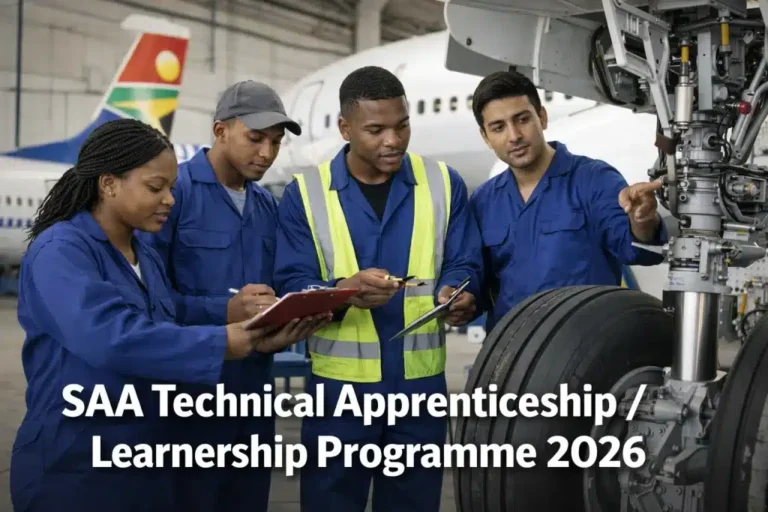
South Africa is witnessing a major expansion in youth training and employment opportunities this February, with over 400 learnerships launched nationwide across multiple sectors. These initiatives aim to empower young South Africans with critical workplace skills while tackling the persistent challenge of youth unemployment.
The large-scale rollout involves private companies, retail giants, financial institutions, manufacturing firms, and government departments. The coordinated intake is designed to combine structured, accredited training with real workplace experience, ensuring participants gain meaningful skills that improve long-term employability.
For unemployed youth aged 18–35, February 2026 represents one of the most opportunity-rich months in recent years, providing access to diverse industries, improved stipends, and nationally recognized qualifications.
A Nationwide Push to Tackle Youth Unemployment
Youth unemployment continues to be one of South Africa’s most pressing socio-economic challenges. In response, private and public sector employers have expanded their participation in structured learnership programmes for 2026.
Key highlights of this February intake include:
Over 400 positions available nationwide
Opportunities across diverse industries
Improved monthly stipends
Greater access for Grade 10–12 applicants
Enhanced public-private collaboration
Industry analysts suggest that the scale of these launches reflects a renewed commitment to bridging the gap between formal education and the world of work, offering young South Africans a practical pathway to meaningful employment.
Key Sectors Offering Learnerships in 2026
Logistics and Supply Chain
Companies such as Bidvest Logistics have opened opportunities in logistics and warehousing, covering roles such as:
Supply chain operations
Inventory control
Distribution management
Warehouse administration
Logistics remains a high-demand sector, particularly as e-commerce and freight operations continue to expand.
Reported stipend: Approximately R6,500 per month, providing financial support for transport, meals, and basic living costs.
Major retail groups, including SPAR, Truworths, and Shoprite Holdings, have launched structured learnership programmes in customer service, sales, merchandising, stock control, and store operations.
Retail learnerships remain one of the most accessible entry points for youth entering the workforce.
Reported stipend: SPAR offers over R5,500 per month, giving learners a practical way to support themselves while gaining valuable retail experience.
Financial Services Expansion
Several banks and financial institutions have opened learnership intakes, including Capitec Bank and SBV Services.
Financial services learnerships often focus on:
Call centre operations
Customer support
Cash management
Data-driven roles
Entry-level banking administration
Stipends: SBV Services offers up to R9,400 per month, while Capitec Bank provides around R5,800 per month. These programmes give youth exposure to one of South Africa’s most stable and growing industries.
These placements provide valuable work experience in the public sector while contributing to national service delivery.
Who Can Apply?
Most February 2026 learnerships are targeting:
Youth aged 18–35
Unemployed South African citizens
Individuals with Grade 10–12 qualifications
Additional requirements may include:
Specific school subjects or TVET qualifications
Basic computer literacy
Clean criminal records
Applicants should carefully review the criteria for each programme to ensure eligibility.
Roles Available Across Sectors
Opportunities span a wide variety of roles, reflecting strong cross-sector participation, including:
Sewing machinists
Cadet foremen
Horticulture assistants
Call centre agents
Logistics assistants
Data capturers
Banking service consultants
Most learnerships last 12 months, combining theoretical learning with supervised practical workplace experience.
Improved Stipends for 2026
One of the most significant developments this year is the increase in stipends, which help reduce financial barriers for applicants. Examples include:
SPAR: R5,500+ per month
Bidvest Logistics: R6,500 per month
Capitec Bank: R5,800 per month
SBV Services: R9,400 per month
Stipends are designed to cover essentials such as transport, meals, data, and basic living costs, making learnerships more accessible for youth from diverse backgrounds.
Apply Through Official Channels Only
Applicants are strongly encouraged to use verified platforms such as SAYouth.mobi, a data-free national portal connecting young people to legitimate training and employment opportunities.
Scam warning:
Legitimate learnerships never charge application fees.
Do not pay money to secure placements.
Avoid sharing personal documents via unverified WhatsApp groups.
Always apply through official company websites or recognized platforms.
Protecting your personal and financial information is critical when applying for opportunities.
Why February 2026 Matters
February could mark a turning point for youth employment if these learnerships successfully translate into long-term careers. Key benefits include:
Nationally recognized qualifications
Structured workplace experience
Professional references
Increased employability
Many learners go on to secure permanent roles within host companies or elsewhere after completing programmes.
Steps Youth Should Take Now
To maximize your chances:
Update your CV immediately.
Prepare certified copies of your ID and qualifications.
Register on SAYouth.mobi.
Apply early before deadlines close.
Double-check submission instructions carefully.
Competition is expected to be high due to the national scale of these opportunities.
A Developing Opportunity Landscape
Industry experts suggest that more learnership announcements may follow in 2026 as additional employers confirm intake programmes. If implemented successfully, February’s 400+ learnership launch could significantly expand access to structured workplace experience for young South Africans.
For youth seeking entry into retail, banking, logistics, manufacturing, or government sectors, this is a critical moment to act. Monitor official company websites, register on verified platforms, and apply responsibly.
This is a developing employment story, and further updates are expected as new programmes are confirmed.
Frequently Asked Questions (FAQ) About February 2026 Learnerships
1. What is a learnership?
A learnership is a structured training programme that combines theoretical learning with practical work experience. Participants gain nationally recognized qualifications while improving their employability.
2. Who can apply for the February 2026 learnerships?
Most programmes target:
Unemployed South African youth aged 18–35
Individuals with Grade 10–12 qualifications
Some programmes require specific school subjects, TVET qualifications, or basic computer literacy.
3. How long do learnerships last?
Most learnerships run for 12 months, providing a mix of classroom-based learning and supervised workplace experience.
4. What sectors are offering learnerships in 2026?
Key sectors include:
Retail: SPAR, Shoprite, Truworths
Logistics: Bidvest Logistics
Government Departments: SASSA and other TVET programmes
Financial Services: Capitec Bank, SBV Services
Manufacturing and Engineering: Astec Industries
5. What roles are available?
Roles vary by sector and may include:
Call Centre Agents
Logistics Assistants
Data Capturers
Banking Service Consultants
Sewing Machinists
Cadet Foremen
Horticulture Assistants
6. Are learnerships paid?
Yes, learnerships offer stipends, not salaries. Examples include:
SPAR: R5,500+ per month
Bidvest Logistics: R6,500 per month
Capitec Bank: R5,800 per month
SBV Services: R9,400 per month
7. How do I apply safely?
Apply only through official company websites or verified platforms like SAYouth.mobi.
Do not pay money for applications.
Avoid sharing personal documents via unverified WhatsApp groups.
Double-check eligibility and submission instructions.
8. Can learnerships lead to permanent employment?
Yes. Many participants secure permanent roles within the host company or other organizations after successfully completing their learnership.
9. Where can I find more opportunities?
Regularly monitor official company websites, government portals, and platforms such as:
A learnership is a structured training programme that combines theoretical learning with practical work experience. Participants gain nationally recognized qualifications while improving their employability.
2. Who can apply for the February 2026 learnerships?
Most programmes target: Unemployed South African youth aged 18–35 Individuals with Grade 10–12 qualifications Some programmes require specific school subjects, TVET qualifications, or basic computer literacy.
3. How long do learnerships last?
Most learnerships run for 12 months, providing a mix of classroom-based learning and supervised workplace experience.
4. What sectors are offering learnerships in 2026?
Key sectors include: Retail: SPAR, Shoprite, Truworths Logistics: Bidvest Logistics Government Departments: SASSA and other TVET programmes Financial Services: Capitec Bank, SBV Services Manufacturing and Engineering: Astec Industries
5. What roles are available?
Roles vary by sector and may include: Call Centre Agents Logistics Assistants Data Capturers Banking Service Consultants Sewing Machinists Cadet Foremen Horticulture Assistants
6. Are learnerships paid?
Yes, learnerships offer stipends, not salaries. Examples include: SPAR: R5,500+ per month Bidvest Logistics: R6,500 per month Capitec Bank: R5,800 per month SBV Services: R9,400 per month
7. How do I apply safely?
Apply only through official company websites or verified platforms like SAYouth.mobi. Do not pay money for applications. Avoid sharing personal documents via unverified WhatsApp groups. Double-check eligibility and submission instructions.
8. Can learnerships lead to permanent employment?
Yes. Many participants secure permanent roles within the host company or other organizations after successfully completing their learnership.
Nonhlanhla Ndlovu is the founder and publisher of EduFeeds, a South Africa–focused platform that shares verified learnerships, internships, bursaries, and job opportunities for young people and job seekers.
With a strong focus on helping South African youth access real career opportunities, Nonhlanhla researches and verifies programmes from official company sources and public announcements before publication. EduFeeds aims to simplify the application process by providing clear guidance, requirements, and practical tips to help applicants apply with confidence.
Nonhlanhla continues to monitor updates from SETAs, companies, and training providers to ensure information on Edu Feeds remains current and useful. She focuses on publishing timely and accurate opportunity updates for the South African youth employment market.
If you’re an aspiring artisan looking to gain real industrial experience, the PepsiCo Apprenticeship Olifantsfontein 2026 could be one of the most practical entry points into South Africa’s manufacturing and supply chain sector. PepsiCo has opened two temporary apprenticeship positions at its Olifantsfontein Cereals Plant, offering structured technical training that combines classroom learning with hands-on…
SASSA 2026 TVET Learnership opportunities are now open for applications, providing unemployed and underemployed South African youth with structured workplace experience through the Work Integrated Learning (WIL) Programme and Head Office Internship Programme. These programmes offer practical skills development, mentorship, and all-inclusive monthly stipends, helping young people transition from education or graduation into meaningful public…
BDO Training Academy Learnership 2026: Requirements, Stipend Details and How the Programme Works The BDO Training Academy Learnership 2026 offers young South Africans an opportunity to gain structured workplace experience while studying toward a recognised qualification in the professional services environment. For individuals who want to start a career in accounting, administration, or business operations,…
Applications close on 20 February 2026 For many diploma graduates in South Africa, the biggest obstacle after graduation is not motivation or qualifications — it’s experience. CVs are ready, certificates are earned, but without real workplace exposure, opportunities remain out of reach. That’s why the opening of the SPAR Diploma Graduate Internship 2026 matters. Hosted…
For many young South Africans with a passion for aircraft and engineering, aviation can feel like an unreachable dream. Training is expensive, entry-level roles are limited, and experience is often required before doors will open. The SAA Technical Apprenticeship & Learnership Programme 2026 offers something rare — a structured, credible pathway into the highly specialised…
You’ve done the hard part. You studied for years.You passed your exams.You earned your qualification. But now comes the part no one really prepares you for: 👉 Getting your first job. In South Africa, thousands of graduates face the same frustrating reality every year—you need experience to get a job, but you need a job…