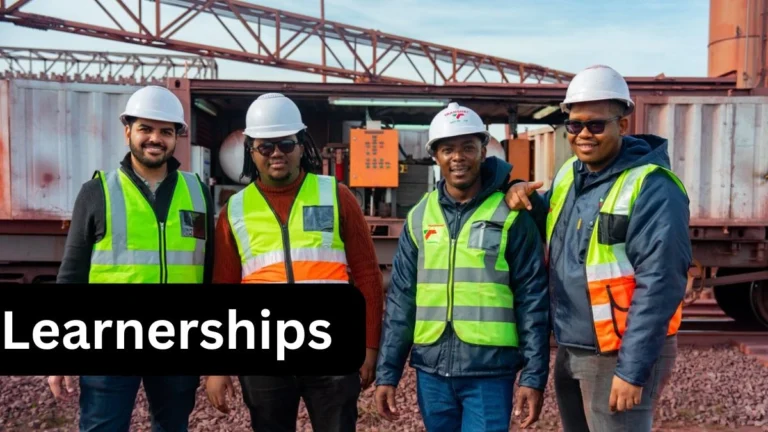
For thousands of young South Africans, finishing school does not lead straight into work. Even those with motivation and basic qualifications often struggle to find opportunities that offer both income and real experience. This gap between education and employment remains one of the country’s biggest challenges ,Training Force Learnership 2026 could be the best solution
The Training Force Learnership Programme 2026aims to close that gap. Open to South African youth with Grade 11 or higher, the programme offers paid, structured training linked directly to industries that are actively looking for skilled workers.
Applications open later this year, and interest is expected to be high.
Why the Training Force Learnership Programme Matters in 2026
Learnerships are not short courses or temporary internships. In South Africa, they are formal training programmes that combine classroom learning with supervised workplace experience and lead to nationally recognised qualifications.
Training Force has built its reputation by partnering with employers in sectors such as engineering, manufacturing, logistics, and technical trades. The focus is practical: learners are trained for real jobs, not just certificates.
For young people who cannot afford university or who need work experience to move forward, this programme offers a realistic route into skilled employment.
Who Can Apply for the Training Force Learnership 2026
The programme is designed to be accessible, especially to youth who are often excluded from further study opportunities.
Minimum Requirements
Applicants generally need:
At least Grade 11
A valid South African ID
Basic communication and teamwork skills
Willingness to commit to workplace training
Most learnerships prioritise applicants between 18 and 35, although motivated older candidates are not automatically excluded. Having Grade 12 or an NQF Level 3 qualification can improve your chances, especially in competitive technical streams.
Documents You’ll Need
Prepare these early:
Certified copy of your South African ID
Proof of residence
Academic records
Updated CV
Some streams may also require a basic medical or fitness assessment.
High-Demand Learnership Streams Offered
Training Force structures its programmes around South Africa’s most urgent skills needs. For 2026, expected streams include:
Mechanical Fitting – Machinery assembly and maintenance in industrial environments
Welding – Fabrication and repair skills used in construction, mining, and manufacturing
Electrical Trades – Installation, wiring, and equipment maintenance
Supply Chain and Logistics – Stock control, warehousing, and transport coordination
These fields remain in demand as infrastructure, manufacturing, and logistics sectors continue to expand.
A key part of the Training Force model is Work Integrated Learning (WIL). Learners spend most of the programme working in real environments under professional supervision.
This means:
Performing real tasks, not simulations
Learning workplace discipline and safety standards
Receiving mentorship from experienced professionals
Many learners say this exposure is what builds confidence and makes them employable. Employers often prefer candidates who already understand workplace expectations, even at entry level.
Application Timeline and Key Dates
Applications open: November 2025
Expected closing date: December 2025 (or earlier if positions fill)
Because demand is high, early applications are strongly advised.
Complete your personal profile carefully and accurately
Upload all required documents in clear PDF format
Select your preferred learnership stream based on interest and background
Review your application before submission
Submit and keep your reference number for tracking
Incomplete or late applications are one of the main reasons candidates are not considered.
What Happens After You Apply
Screening and Shortlisting
Applications are reviewed for eligibility, document accuracy, and suitability. Shortlisted candidates are usually contacted between January and February.
Assessments
Some applicants will complete basic aptitude tests, including:
Simple mathematics
Reading comprehension
Problem-solving exercises
These tests assess potential, not perfection.
Interviews
Interviews focus on attitude, reliability, and motivation. Common questions include:
Why you chose this learnership
What skills you want to gain
How you work in a team
Honesty and willingness to learn matter more than polished answers.
Why This Learnership Is a Real Opportunity
From a skills development perspective, the Training Force Learnership Programme 2026 addresses two problems at once: youth unemployment and industry skills shortages.
It gives Grade 11 learners—often overlooked—a chance to earn, learn, and build a future. At the same time, it helps employers develop skilled workers from within South Africa.
Many graduates move into permanent roles or continue with further technical training after completion.
Frequently Asked Questions (FAQs)
What is the Training Force Learnership 2026?
The Training Force Learnership 2026 is a paid skills development programme that combines classroom learning with real workplace training. It leads to a nationally recognised qualification and prepares learners for entry-level employment in technical and industrial sectors.
Who qualifies to apply?
South African citizens with Grade 11 or higher may apply. Most programmes prioritise youth aged 18–35, but selection is based on motivation, eligibility, and availability of placements.
Is the Training Force Learnership 2026 paid?
Yes. Learners receive a monthly stipend, usually between R3,000 and R5,000, depending on the learnership stream and SETA guidelines. The stipend helps cover transport and basic living costs
Do I need work experience to apply?
No prior work experience is required. The programme is designed for first-time job seekers and unemployed youth who want to gain practical skills.
How long does the learnership last?
Most Training Force learnerships run for 12 months, combining theory with structured workplace exposure.
What qualifications do learners receive?
Successful learners receive a SETA-accredited qualification aligned with the National Qualifications Framework (NQF), which is recognised by employers across South Africa.
When do applications open and close?
Applications typically open in November and close in December, but programmes may close early once positions are filled. Applying early is strongly recommended.
Does completing the learnership guarantee a job?
Employment is not guaranteed, but many learners are absorbed by host companies or find work more easily due to their qualification and experience.
Nonhlanhla Ndlovu is the founder and publisher of EduFeeds, a South Africa–focused platform that shares verified learnerships, internships, bursaries, and job opportunities for young people and job seekers.
With a strong focus on helping South African youth access real career opportunities, Nonhlanhla researches and verifies programmes from official company sources and public announcements before publication. EduFeeds aims to simplify the application process by providing clear guidance, requirements, and practical tips to help applicants apply with confidence.
Nonhlanhla continues to monitor updates from SETAs, companies, and training providers to ensure information on Edu Feeds remains current and useful. She focuses on publishing timely and accurate opportunity updates for the South African youth employment market.
For many young South Africans, finding work after school is not just difficult — it feels impossible. Even those willing to start at entry level are often blocked by one thing they cannot control: lack of experience. With youth unemployment still one of the country’s most pressing challenges, practical skills programmes have become a lifeline…
Updated: 11 October 2026 | Education and Skills Development South Africans looking to improve their employment prospects can now explore more than 300 free online courses through EduCourse, a South African digital learning platform offering flexible training in computer skills, administration, caregiving, business, technology and other career-related subjects. The platform allows unemployed job seekers, Matric…
If you’re unemployed (or underemployed) and looking for a realistic way to build job-ready skills in 2026, the UPW Training Academy Learnership 2026 (±R3,500/Month Allowance) is the kind of opportunity worth taking seriously. It’s fully online, has a relatively low entry barrier (Grade 11 minimum), and focuses on practical skills that can help you qualify…
Transnet Yard Officials Training Programme 2026: what this intake really is (and why most applicants get filtered out) The Transnet Yard Officials Training Programme 2026 intake is open, with key listings closing on 06 March 2026 (some site/location posts may close 05 March 2026, depending on the requisition). This is not a “quick course.” It’s…
If you’re trying to break into hotels, restaurants, catering, events, or tourism, the Services SETA Hospitality Learnership 2026 is one of the best “earn-while-you-learn” pathways—because it combines training + workplace experience and often leads to a recognised qualification depending on the host employer/training provider. One important thing to understand upfront: Services SETA usually does not…
Pick n Pay Blockman MasterCut Programme 2026 Opens Doors to a Skilled Trade Career South Africa’s retail sector depends on skilled artisans to keep food supply chains running efficiently, safely, and professionally. One of the most in-demand yet often overlooked trades is butchery — a career that combines technical skill, discipline, and long-term employability. The…